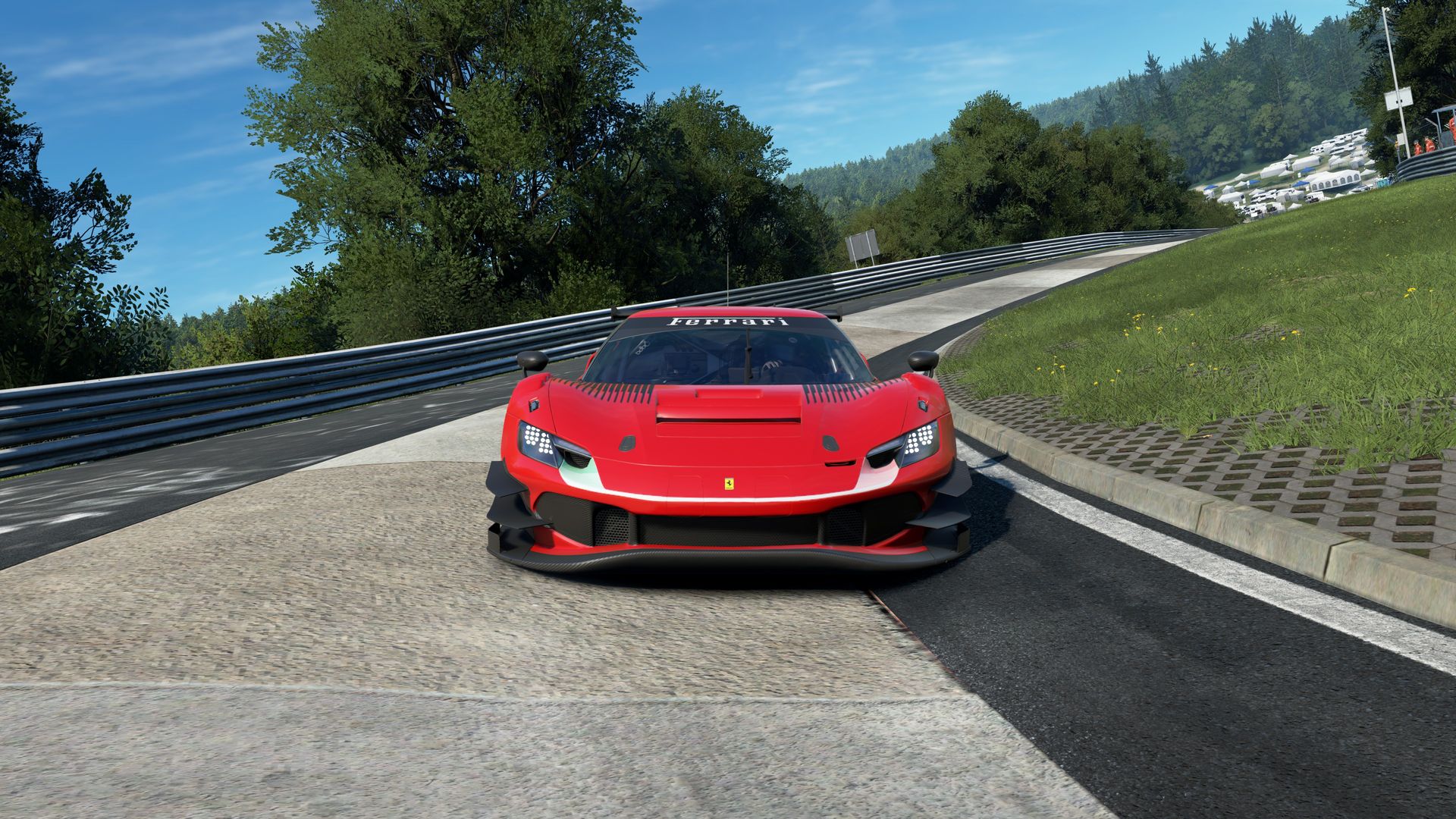
When a car takes a corner, the outside wheel travels further than the inside one. If they were rigidly joined, one would have to drag: the car wouldn't turn properly and the tyre would be destroyed.
The differential lets them turn at different speeds. That's its basic job, and it's why every car has one.
The problem shows up with power: an open differential sends torque to the wheel with less grip. On corner exit the inside wheel unloads, spins, and all the power goes there while the outside one — the one that could actually push — gets nothing.
A limited-slip differential caps how much speed difference it allows. When it detects one wheel running away, it partially "locks" and forces the other to take some of the torque.
And here is the central trade-off of the whole thing:
In other words: the differential is the tool you use to decide how much agility you're trading for how much traction.
The baseline resistance, present even with no torque. It acts mainly in transitions: turning in, lifting off, getting back on the power.
How much it locks with the throttle open. This rules corner exit.
How much it locks off the throttle or under engine braking. This rules entry.
| What you feel | Likely setting | Direction |
|---|---|---|
| Wheelspin opening the throttle in slow corners | Power lock | Raise it |
| Car runs straight on when you accelerate | Power lock | Lower it |
| Rear lets go when you lift mid-corner | Coast lock | Raise it |
| Won't rotate on entry even off the throttle | Coast lock | Lower it |
| Nervous in chicanes and direction changes | Preload | Raise it |
| Lazy on turn-in, feels heavy | Preload | Lower it |
| Rear tyres very hot after slow corners | Power lock | Lower it a little |
As always: one setting, five laps. The differential is especially treacherous because its effect is easily confused with the anti-roll bars.
With the differential and brake bias under control, what's left is aerodynamics and suspension, which decide your speed through fast corners. Start with aerodynamics.
Up to a point. More lock shares the torque better and you spin the wheels less, but the car resists turning. Past the optimum you lose more from not turning than you gain from traction.
The minimum resistance the differential has to letting one wheel turn faster than the other, even with no torque applied. It rules the transitions: turn-in, lifting off, and getting back on the power.
Usually coast lock set too high: the differential brakes the rear axle abruptly when you lift and the rear loses grip. Take a couple of clicks off it.
Yes. High power lock makes both rear tyres spin together out of slow corners, which heats and wears them noticeably faster.
What it is, why it rotates the car, how to practise it and the mistakes that end in a spin.
Read →What each click does, how it shows up at the rear axle and how to find your value.
Read →What each parameter does, what order to touch them in and how to spot clipping.
Read →A couple of clicks of differential show up in the first slow corner. Try it in an open session.
 assettocorsaevo