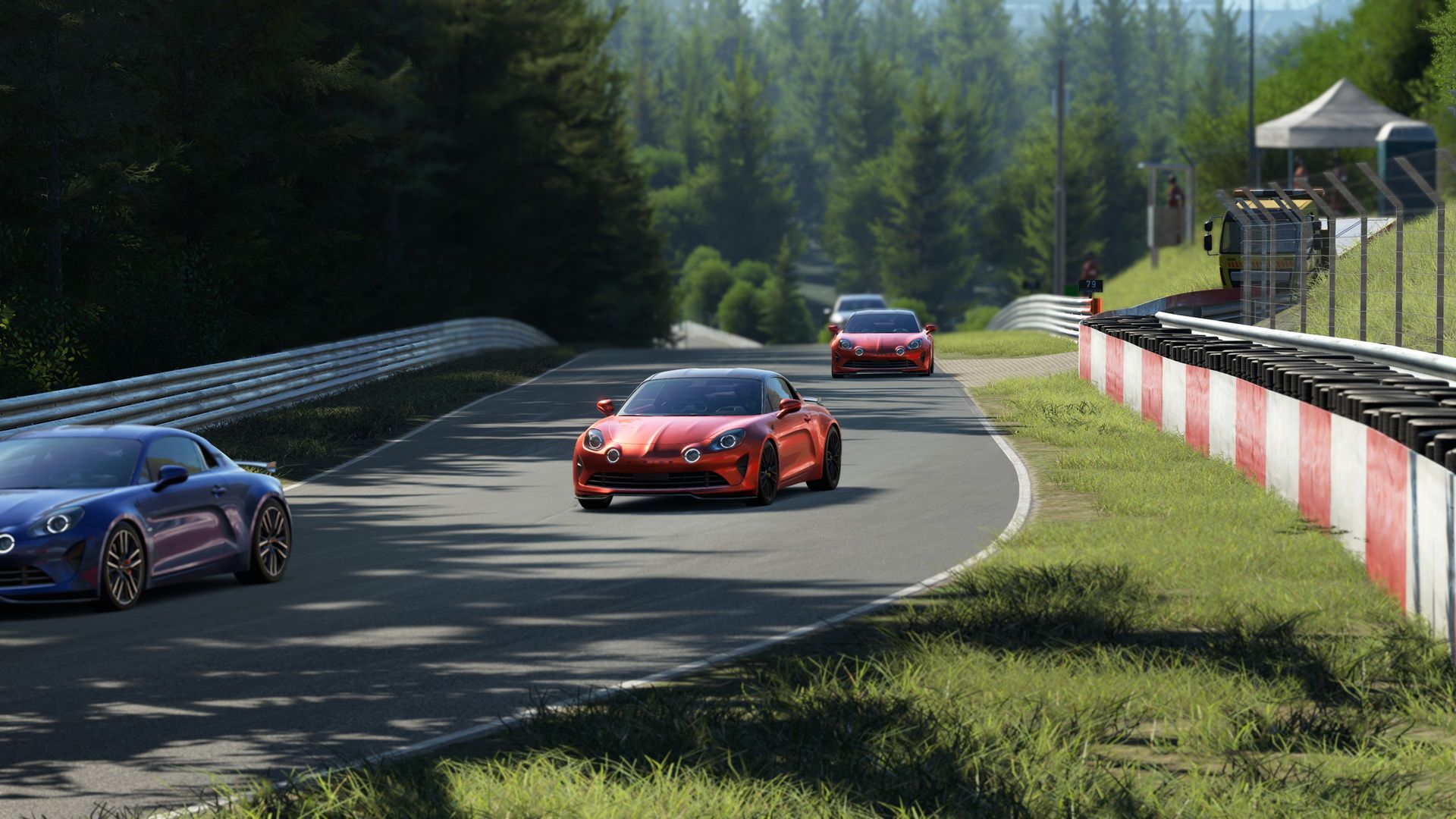
The common belief is that you improve by accumulating laps. It's true at first and stops being true quickly. Past a certain point, lapping with no plan only cements the mistakes you already have: you repeat the same bad braking two hundred times and turn it into a habit.
Real training has three elements: a hypothesis ("I think I'm braking early into turn 4"), a change ("brake five metres later") and a measurement ("does sector 2 come down or not"). Without all three, you're driving, not training.
Not all corners are worth the same. Time is distributed like this, most important first:
Practical conclusion: if you have an hour, spend all of it on the two or three corners that lead onto straights. That's where your second is.
Full-lap time is too coarse: it mixes twenty things together. Sector times don't.
Concrete method:
And a rule that saves a lot of frustration: compare against yourself. Comparing against the outright track record tells you nothing about what to change.
The mistake that stalls most people is changing three things at once: braking point, line and setup. Then the time goes up or down and there's no way to know why.
The discipline that works:
It sounds slow. In an hour you run twelve experiments, and two or three of those give you real time. That's more than almost anyone achieves lapping aimlessly for a whole afternoon.
One good lap in twenty is worth nothing in a race. And it's misleading: it makes you believe that's your pace when your real pace is a second worse.
A far more useful target than a fast lap: five consecutive laps within three tenths of each other. When you can do that, two things happen on their own:
And the fast lap turns up eventually, because consistency is what lets you push without fear.
Ninety minutes, split like this:
If you leave without having lowered your time but knowing which corner is missing, it was a good session.
There comes a point where the time stops falling no matter how much you drive. Things that break that, in order of effectiveness:
If the ceiling is your entry technique, the next step is trail braking. If it's the track itself, use the section-by-section method.
Fewer than people think, if they're done with intent. Twenty laps working one specific corner are worth more than a hundred laps with no plan.
As a decent starting point, yes. For improving, no: an extreme setup built for someone else's style will make you slower and you won't know why.
For a fast lap yes, but don't get used to it: the race car is heavy and brakes differently. Alternate fast-lap sessions with race-load runs.
Far less than technique. With the same driver, a well-tuned setup gives you a few tenths; entry and exit technique gives you seconds.
What it is, why it rotates the car, how to practise it and the mistakes that end in a spin.
Read →What each click does, how it shows up at the rear axle and how to find your value.
Read →What each parameter does, what order to touch them in and how to spot clipping.
Read →The 24/7 rotation is voted by members. There's always someone to compare pace with.
 assettocorsaevo