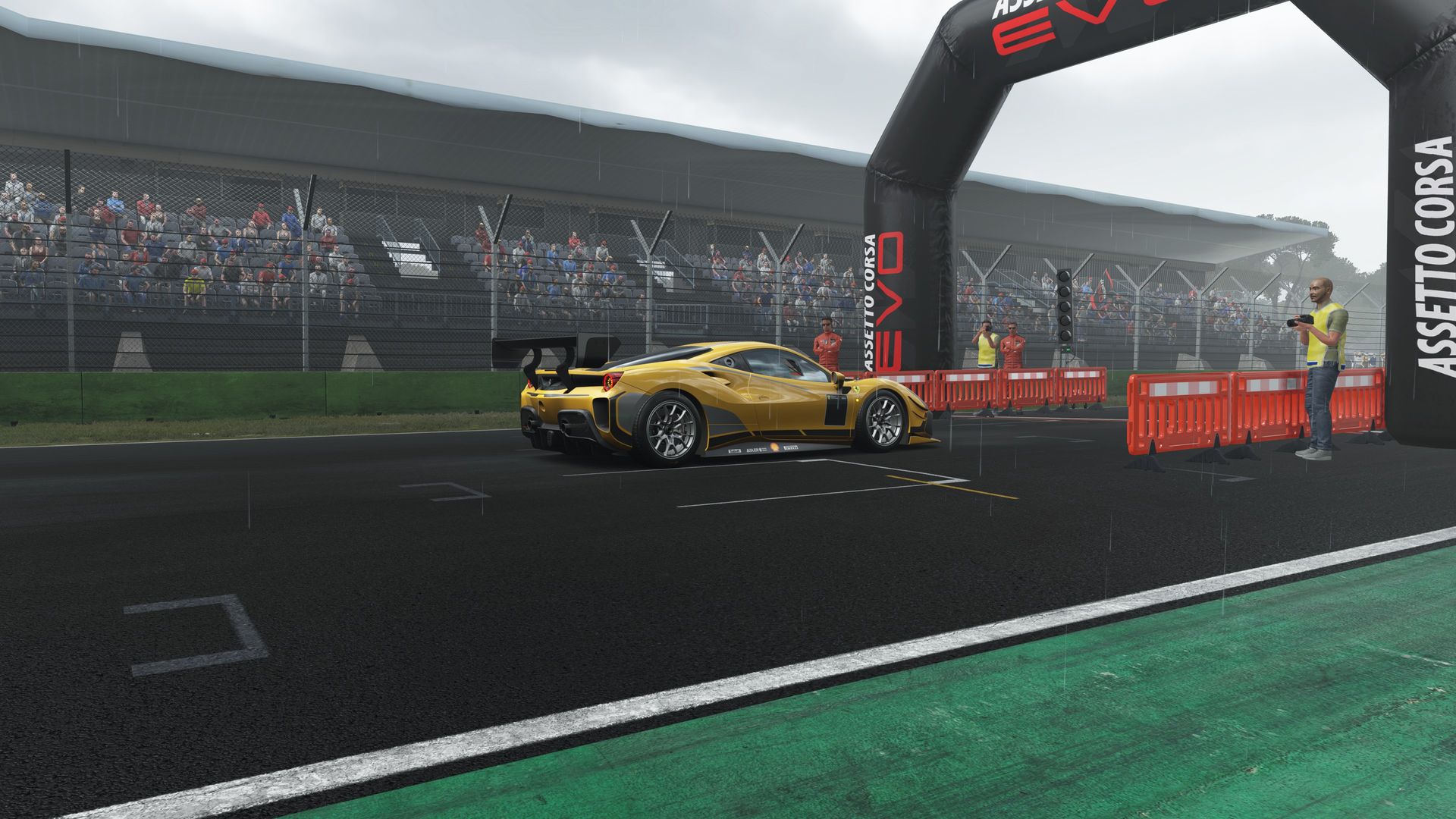
The classic mistake with rain is opening the setup menu and changing ten things at once. When the car improves you don't know why, and when it gets worse you don't either.
In the wet there's a fairly clear hierarchy of impact. Highest first:
If you only have time for two, do the first two. The rest are tenths; those two are the difference between finishing and not finishing.
A wet tyre has two jobs: clear water and generate grip. Both depend on pressure.
In the dry you want the tyre to reach its temperature and pressure window as you run. In the wet, water constantly cools the surface, so the tyre never reaches the temperature it would in the dry. Practical consequence: you must start with higher cold pressures than you'd use in the dry, because they're going to climb far less.
On top of that, slightly higher pressure crowns the tread a little, which helps the grooves push water out instead of the tyre floating on it.
If the car skates in a straight line through standing water, that isn't the setup: that's aquaplaning. You fight that with ride height and with your line, not with pressures.
A dry GT3 runs low and stiff because that's how it exploits the aero and responds quickly. In the wet the same choices work against you.
The feel you're after is a car that moves around more than you'd like in the dry. That movement is information: it warns you before it goes.
Soften them, especially the rear. A stiff rear bar makes the car agile in the dry and treacherous in the wet: as it loads up it lifts the inside rear wheel and the axle goes.
Rule of thumb: in the wet, soft bars both ends, and if you have to choose, softer at the rear than the front.
This is one of the biggest lap-time differences in the rain. A GT3 differential has three parameters that matter:
With the differential more open the car feels slower to react. It is. And that's why you can get on the throttle earlier. The full detail is in the differential article.
In the wet the front axle has less grip available and locks earlier. The fix is to move the bias back a little from your dry value, to share the work.
Careful: too far back and the rear locks and the car snaps sideways under braking, which in the wet you won't catch. Move it in small steps and test.
If the car has adjustable ABS, raise it a level. You lose some ultimate stopping power, but in the wet a perfect stop doesn't exist: what you need is to brake and turn at once without surprises.
And one thing people forget: brake earlier and straighter. No setup compensates for a late stop on water. Bias is covered in depth here.
Add wing. In the wet top speed matters far less — you're going to be slower everywhere — and stability in fast corners is everything.
A high wing also helps braking, because it generates load exactly when you need it most. It's one of the few changes with almost no downside in heavy rain.
Exception: if the rain is light and a dry line is forming, don't overdo it. You're moving into an intermediate situation where top speed counts again.
The best wet setup won't make you fast if you drive it like the dry. Three changes of style worth more seconds than any adjustment:
What you can change without pitting: brake bias, ABS level and traction control if the car has it. Start there the moment you feel the first drops.
The hard call is when to come in for wets. Practical criteria:
And in reverse: when it stops, the track dries on the racing line. Then it's the opposite — back to the usual line, hanging on with wets until they start to overheat. The strategy side is in race strategy.
You start slightly higher than your dry cold pressures. A wet tyre runs cooler because the water cools it, so you start higher to reach its window sooner and to help it clear water.
Two reasons: it reduces the risk of aquaplaning through standing water, and it softens the car's response. A very low, stiff car in the wet is nervous and loses the rear without warning.
No. If the rain is brief, change tyres and brake bias and drive what you have. A wet setup on a drying track is worse than a dry setup in light rain.
The direction does, the values don't. A track with slow corners needs more help with traction; a fast one needs more stability. Use this as a starting point and adjust.
What it is, why it rotates the car, how to practise it and the mistakes that end in a spin.
Read →What each click does, how it shows up at the rear axle and how to find your value.
Read →What each parameter does, what order to touch them in and how to spot clipping.
Read →The 24/7 server runs variable conditions: the best place to practise the wet with nothing at stake.
 assettocorsaevo