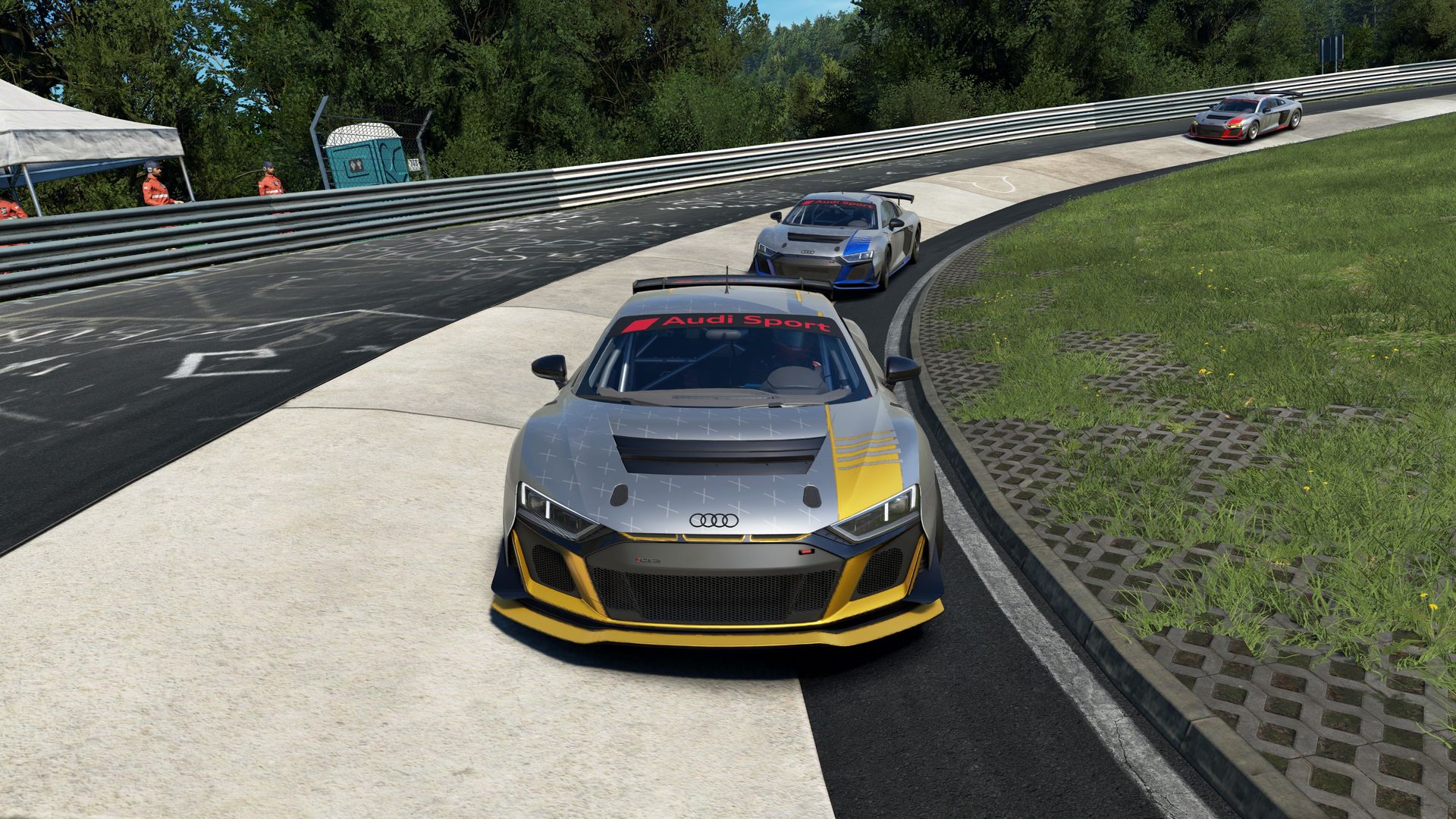
A racing driver doesn't brake "when it feels right". They brake when they pass a specific point chosen in advance. That's the whole difference between being consistent and not.
A good reference meets three conditions:
For each important corner you need three: where you brake, where you turn and where you get back on the throttle. With those, the corner stops being an improvisation.
A trick that speeds the process up a lot: say it out loud as you drive. "Brake at the board, turn at the kerb, throttle when I see the fence." It sounds ridiculous and it works.
Nobody memorises a circuit in one go, just as nobody memorises a song by hearing it once from start to finish.
Split the lap into three to five blocks, always cutting at a point that's easy to recognise: the end of a straight, a very distinctive corner, a crest.
Then work block by block:
On a short circuit this takes half an hour. On something like the Nordschleife, weeks, which is why it has its own method.
Not every corner deserves the same attention. The order that returns the most time:
Fewer than people think, if they're done with intent:
| Goal | Approximate laps |
|---|---|
| Knowing where it goes | 10 to 15 |
| Having references at the key corners | 20 to 30 |
| Being consistent within a second | 40 to 60 |
| Approaching your real limit | Hundreds, and still falling |
What multiplies that number is lapping without a plan. A hundred laps staring at the clock teach you less than thirty working one specific corner, as explained in the fast lap method.
What you learn fades if you don't consolidate it. Three things that fix it:
And an honest test that you have it: close your eyes and recite the lap. If you can list the corners in order with their references, you know it. If you lose the thread halfway, that's the block that's missing.
Our track guides have a corner-by-corner breakdown of each circuit, which is exactly what this is for.
To know where it goes, fifteen to twenty laps with intent. To be quick, considerably more, but the memorising part closes quickly if you look for references instead of just repeating.
Yes, for locating braking points and lines. Watch short sections, then drive them immediately: watching whole laps without driving afterwards fixes nothing.
A slow one. It gives you time to process what you see and the references stick better. Moving to a fast car changes braking points, but you already have the layout.
The track, always. A setup tuned on a circuit you don't know gives you false conclusions, because you can't tell whether the car is off or you are.
What it is, why it rotates the car, how to practise it and the mistakes that end in a spin.
Read →What each click does, how it shows up at the rear axle and how to find your value.
Read →What each parameter does, what order to touch them in and how to spot clipping.
Read →The 24/7 rotation is voted by members: a good excuse to learn a new one every seven days.
 assettocorsaevo