Assetto Corsa EVOassettocorsaevo.es
Home / Tracks / Circuit of the Americas

Circuit of the Americas

A modern circuit that borrows the best of others: the esses recall Silverstone and the final sector Hockenheim. The climb to turn 1 is the part that's all its own.

  • GP
  • Estados Unidos
Trazado del circuito de Circuit of the Americas
5,513Kilometres
20Corners
Anti-clockwiseDirection
2012Opened
Difficulty to learnConsiderable
Average speedHigh
Physical demandHigh
Punishment for mistakesMedium
How much setup mattersHigh
Ease of overtakingHigh
How it drives

What you'll find

The Circuit of the Americas is the first circuit built in the United States specifically for Formula 1, and its design is openly a tribute: the first-sector esses quote Silverstone, the hairpin after the back straight recalls Hockenheim, and there are nods to Istanbul and Suzuka. What saves it from being a collage is the terrain: Austin has natural elevation unusual for the area, and COTA uses it with a climb to turn 1 that's unique on the calendar. In Assetto Corsa EVO it's a very rewarding circuit: wide, with run-off and with easy overtaking.

Turn 1 climbs blind and you brake on the crest, with the car light exactly when you need the brakes most. It's the place on the calendar where most is lost on the opening lap, because the correct line isn't visible until you're already in it.

The second sector is linked fast esses that demand rhythm and a car that's stable through direction changes. Then comes the long back straight, ending in a hairpin: that's where the easy overtake lives, and the easy mistake.

Where the time is

The three keys

01

Curva 1

Subida ciega con frenada en la cresta. Referencia obligatoria; los ojos no te ayudan.

02

Eses (3-6)

Se toman como secuencia. Coche estable y nada de correcciones bruscas.

03

Curva 12

Horquilla al final de la recta trasera. El adelantamiento de manual.

Lap guide

Sector by sector

How the lap unfolds from start to finish, with the lines and the places where time is genuinely won and lost.

Trazado de Circuit of the AmericasS1

Sector 1 · La subida a la curva 1 y las eses

The lap begins by climbing. Turn 1 sits at the top of a steep rise, so you arrive at the braking zone without seeing the apex and with the car going light over the crest exactly as you hit the pedal. It's where most is lost on the opening lap of a race, because the correct line doesn't appear until you're already in it.

From there you drop into the esses, a fast sequence of direction changes taken as one block. Rhythm and car stability rule here: any sharp correction at the first apex is dragged to the last and you exit slowly into sector 2.

Trazado de Circuit of the AmericasS2

Sector 2 · Technical section and back straight

The middle sector is slower and twistier, with medium-speed corners where exit traction matters. It isn't spectacular but it's where the tenths are built, and where setup shows most.

It all feeds the back straight, enormously long and uphill, ending at turn 12: a wide hairpin with a huge braking zone. It's the circuit's textbook overtake and where almost every race is decided.

Trazado de Circuit of the AmericasS3

Sector 3 · El estadio y las curvas finales

The final part loops round the grandstand area with linked fast corners that recall the Istanbul sector. They're taken with plenty of grip and punish a nervous car.

The last sequence returns you to the pit straight, and a good exit there shapes the climb to turn 1 on the following lap. As at almost every modern circuit, the lap ends by setting up the next attack.

Glossary

Every corner, one by one

What each corner is called, what type it is and what it asks of you.

NºNameTypeWhat it asks for
1Turn 1Izquierda cerrada en subidaBraking on a crest, blind apex. The key to the circuit.
2-6Las EsesFast sequenceSe toman como bloque. Ritmo por encima de trazada.
7-8Curvas 7-8Apoyos mediosTechnical link. Exit traction.
9-10Curvas 9-10Fast rightsApoyo sostenido antes de la zona lenta.
11Turn 11Horquilla lentaExit onto the back straight: traction rules.
12Turn 12Horquilla ampliaEl adelantamiento de manual. Frenada enorme.
13-15Curvas 13-15Enlace medioA zone of traffic and defending.
16-18Sector del estadioLinked fast cornersMucho apoyo. Castigan el coche nervioso.
19-20Curvas finalesDerecha-izquierdaDefinen la velocidad en meta.
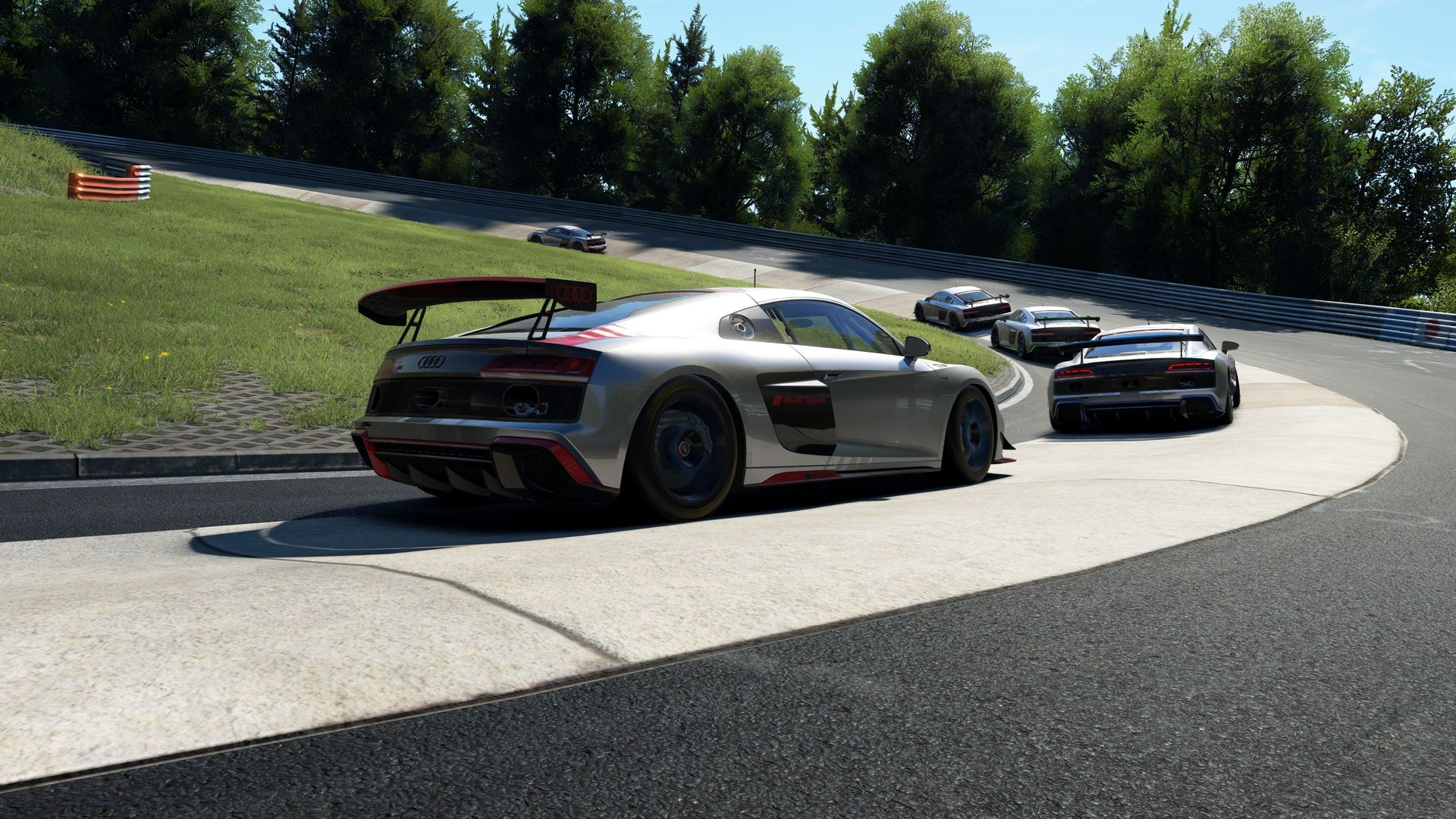
Grupo GT3 encadenando la curva de enlace
Community

Circuit of the Americas

Taken at Nordschleife · Grupo GT3 encadenando la curva de enlace

Turn 1 is braked on the crest, with the car light and no sight of the apex. Everything else here is easier than that.
Setup

How to set the car up

COTA wants a balanced car with no extremes. You need grip for the esses and the stadium section, but also top speed for the back straight, which is long and uphill. Most people end up in a middle ground similar to a standard European circuit.

La curva 1 condiciona el reglaje de frenada: al frenar en una cresta, el coche se descarga y bloquea con facilidad. Un reparto ligeramente atrasado ayuda, aunque penalice un poco en la horquilla de la 12.

Austin's asphalt has suffered bumps from ground settlement, so it's best not to run the car excessively stiff: in the sunken areas of sector 1 you lose grip exactly under load.

Cars

Which car to bring here

Formula and single-seaters

The circuit was designed for them and the climb to turn 1 is spectacular. The back straight generates constant overtaking.

GT3

Very good racing, with two clear braking zones and width to spare for fighting without contact. It's one of the layouts where a GT3 is most enjoyable in a long race.

Touring cars and GT4

Al ser ancho y con escapatorias, es un circuito muy amable para aprender a competir, aunque la vuelta larga hace que las diferencias de ritmo se noten.

Mistakes

What almost everyone gets wrong

  1. Frenar por la vista en la curva 1. The apex isn't visible until you're in it. You have to brake off a fixed reference; going by what you can see always leads to overshooting.
  2. Romper el ritmo de las eses. They're taken as one sequence. Braking mid-way or correcting sharply costs more than entering the first one slightly slow.
  3. Entrar pasado en la 12. The braking zone is huge and encourages you to go too deep. Overshooting here means losing the place you just gained.
  4. Descuidar la salida de la 11. It's the one that feeds the back straight. Losing traction there is paid for down the whole straight and at the braking zone after it.
  5. Running the car very stiff. The asphalt has sunken sections. The stiffness that works at a smooth circuit produces losses of grip under load here.
Practice

How to learn it without frustration

Spend your first runs exclusively on turn 1. It hides the most time and is the hardest to master, and until you have a fixed braking reference you won't be able to build a consistent lap.

Work the esses without a stopwatch, chasing flow. When you stop correcting, look at the time: it will almost always have come down on its own.

Practise the back straight–turn 12 block in traffic, because in a race you'll spend half your time attacking or defending there. Learning to position the car before the braking zone is worth more than a tenth of qualifying pace.

Conditions

Rain and night

In the wet

The sunken sections of asphalt collect water and cause localised aquaplaning, especially in sector 1. Turn 1, already tricky in the dry because of the crest, becomes the most delicate point on the lap in the wet.

At night

Es un circuito bien iluminado en las zonas principales, y la parte del estadio funciona muy bien de noche. La subida a la curva 1 pierde algo de referencia visual pero sigue siendo practicable.

Reality and the sim

From the real circuit to Assetto Corsa EVO

Un circuito nuevo, escaneado desde el principio

COTA was built in 2012, in the middle of the laser-scanning era, so very precise survey data has existed since day one. In Assetto Corsa EVO that means the exact gradient on the climb to turn 1, which is where the circuit stakes its personality.

It also captures a real problem with the track: ground settlement has produced sunken sections that have been repaired over the years. The game reproducing those bumps changes the setup you should run.

What carries over well

The braking references at turns 1 and 12, the two that matter and both perfectly signposted. And the technique through the esses, which is purely geometric and works identically in both worlds.

COTA is also heavily used for driving schools, precisely because it's wide and safe, and sim preparation transfers well.

What doesn't carry over

The heat. Austin in summer comfortably passes 35 degrees, and that affects the driver, the tyres and the cooling in a way that doesn't exist at home. Many races here are decided by heat management.

And the scale. The climb to turn 1 is about an 11% gradient, and seeing it in person is considerably more striking than on screen.

Visitar Austin

COTA is a modern complex with a museum, an observation tower and a concert amphitheatre. It runs track days, driving schools and experiences in its own cars all year.

The big date is the United States Grand Prix in autumn, which combines racing and concerts and fills the city. It also hosts MotoGP and IMSA. [Confirm dates and tickets on the circuit's official website.]

Data

Track data

Official nameCircuit of the Americas
LocationAustin, Texas, Estados Unidos
Length5,513 km
Corners20
DirectionAnti-clockwise
Desnivel curva 1Subida de aproximadamente un 11%
Opened2012
DesignerHermann Tilke
Main racesGran Premio de Estados Unidos, MotoGP, IMSA
In Assetto Corsa EVOLaser scanned, full layout
COTA cita a media docena de circuitos famosos. Lo raro es que funciona.
History

Where it comes from

Opened in 2012 in Austin, it's the first circuit built in the United States specifically for Formula 1. It was designed by Hermann Tilke, using terrain with natural elevation unusual for the area.

As well as F1 it hosts MotoGP and IMSA, and its 11% climb to turn 1 quickly made it one of the modern circuits with the most personality.

History

The moments that made it

2012

El primer circuito de F1 hecho en Estados Unidos

It opened as the first American track built specifically for Formula 1, after years in which the country had no permanent venue.

2013

Llega MotoGP

The motorcycle world championship added COTA to its calendar, and the climb to turn 1 became a familiar image in motorcycling too.

2015

La carrera del diluvio

A tropical storm drowned the weekend and forced the whole programme to be reorganised, in one of the most chaotic races in the circuit's recent history.

Today

Un fin de semana de festival

El Gran Premio de Estados Unidos combina carrera y conciertos de artistas internacionales, lo que ha convertido la cita en una de las de mayor asistencia del calendario.

In person

Visiting the real circuit

COTA is about twenty minutes from downtown Austin and is a modern complex built with visitors in mind: an observation tower overlooking the whole layout, a museum and a concert amphitheatre inside the grounds.

It runs track days, driving schools and passenger experiences through almost the whole season. Being wide with generous run-off, it's one of the best circuits for a first experience on track.

The big date is the United States Grand Prix in autumn, which fills the city and combines sport and music. MotoGP and IMSA complete the international calendar. [Confirm dates and tickets on the circuit's official website.]

Data

Trivia

Questions

Frequently asked

How long is the Circuit of the Americas?

It's 5.513 kilometres with 20 corners. It runs anti-clockwise.

Why is COTA's turn 1 so difficult?

Because you climb a steep rise and brake right on the crest, with the car unloading and no sight of the apex until you're inside the corner.

Where do you overtake at COTA?

Sobre todo en la curva 12, al final de la recta trasera, que tiene una zona de frenada enorme. La curva 1 es el otro punto habitual, especialmente en la salida.

Which circuits does COTA resemble?

Its design deliberately quotes several: the esses recall Silverstone, the back straight hairpin Hockenheim and the fast final sector Istanbul Park.

Who designed the Circuit of the Americas?

Hermann Tilke, the architect of most modern Formula 1 circuits, working with a site that had natural elevation.

Can you drive at COTA?

Yes. The circuit runs track days, driving schools and driving experiences in its own cars for much of the year.

Gallery

Community shots

Screenshots taken by the community in Assetto Corsa EVO. Each caption says which circuit it's from.

Grupo GT3 encadenando la curva de enlace
NordschleifeGrupo GT3 encadenando la curva de enlace
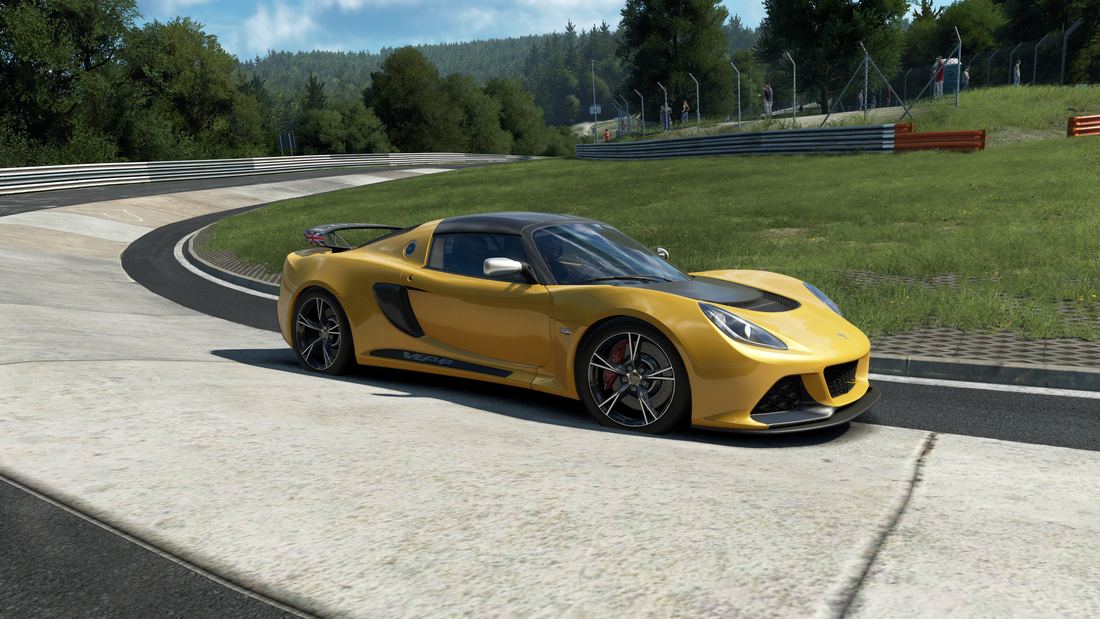
Lotus Exige V6 Cup pisando piano
NordschleifeLotus Exige V6 Cup pisando piano
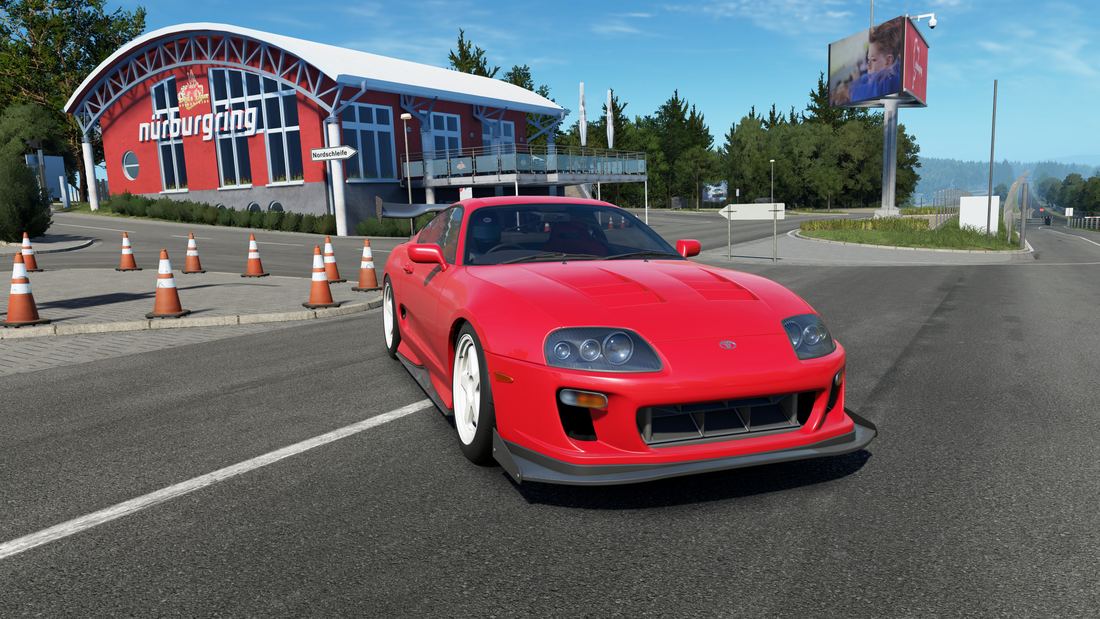
Supra en la salida, cono a cono
NürburgringSupra en la salida, cono a cono
Keep reading

If you like this one, try these

To go faster here

Guides that help you
at this circuit

Race here this week

The Circuit of the Americas is in the 24/7 server rotation. Subscribers vote on each week's track.

See the servers