Assetto Corsa EVOassettocorsaevo.es
Home / Tracks / Nürburgring

Nürburgring

Four layouts in the same complex, from the modern GP circuit to the 20.8 km Nordschleife. It's the home of the 6 Hours and the place where you learn most and break most.

  • GP
  • Sprint
  • Nordschleife
  • 24H
  • Alemania
Trazado del circuito de Nürburgring
20,832Kilometres
+150Corners
ClockwiseDirection
1927Opened
Difficulty to learnMaximum
Average speedHigh
Physical demandMaximum
Punishment for mistakesMaximum
How much setup mattersHigh
Ease of overtakingMedium
How it drives

What you'll find

The Nürburgring isn't one circuit: it's four. The same complex holds the modern GP layout, its shortened Sprint version, the 20.8 km Nordschleife and the link between the two — the 24H layout, used for endurance racing and the one we race in the 6 Hours. Choosing between them isn't picking a variant: it's changing sport. The GP circuit is learned in an afternoon and raced wheel to wheel; the Nordschleife takes weeks and punishes you with a wrecked car. Assetto Corsa EVO reproduces all of them, and it's worth understanding them separately before deciding where you want to race.

You don't memorise the Nordschleife in an afternoon: it's over 150 corners, many of them blind and almost all with elevation change. The trick isn't going fast, it's not breaking the car. Fox Hole, Bergwerk and Pflanzgarten are where most quick laps end, nearly always from entering two km/h too fast.

The modern GP circuit is the opposite: wide asphalt, generous run-off and clean braking zones where you can fight without fear. Joined together they form the 24H layout, and that change of character halfway round the lap — from modern circuit to forest — is exactly what makes the endurance race special.

Where the time is

The three keys

01

Karussell

The concrete banking. Drop into it and let the car fall in on its own; forcing the entry breaks your suspension.

02

Pflanzgarten

Salto ciego a alta velocidad. Coche recto en el aire o no hay salida.

03

Bergwerk

The corner that has ended more races than any other. Brake earlier than your instinct says.

Variantes

Trazados del recinto

Trazado GP del NürburgringGP

El trazado moderno de 5,1 km, limpio y con escapatorias amplias.

Trazado Sprint del NürburgringSprint

El GP recortado: vuelta corta, muy densa, ideal para carreras cortas.

Trazado Nordschleife del NürburgringNordschleife

The 20.8 km of the Green Hell, without a metre of forgiveness.

Trazado 24H del Nürburgring24H

Nordschleife enlazada con el GP. El trazado de las 6 Horas.

Gallery

Nürburgring en la comunidad

Nürburgring en Assetto Corsa EVO
Lap guide

Sector by sector

How the lap unfolds from start to finish, with the lines and the places where time is genuinely won and lost.

Trazado de NürburgringS1

Sector 1 · Del GP a la entrada del bosque

On the 24H layout the lap starts on the modern circuit, and that's deceptive: wide asphalt, generous run-off and corners with clear references. The Yokohama chicane and the Ford-Kurve are taken with a stable car and no surprises, and it's the only stretch where you can fight for position without risking your race.

The change comes at the link onto the Nordschleife. The track narrows, the run-off disappears and the asphalt starts showing joints and patches. From there you drive with a different head: the modern circuit is over and the 1927 mountain road begins.

Trazado de NürburgringS2

Sector 2 · Hatzenbach, Flugplatz y Schwedenkreuz

Hatzenbach is a chain of fast corners, narrow and with the edge of the track right there. There's no heavy braking: there's rhythm. The typical error is entering the first one too fast and spending the rest of the sequence correcting, losing time in five corners because of one mistake.

Then come Flugplatz and Schwedenkreuz, where the Nordschleife starts baring its teeth. At Flugplatz the car goes light over a crest at more than 200 km/h; at Schwedenkreuz you're flat out with the track curving gently and no sight of the exit. Both are places where a sharp correction ends in the barrier.

Trazado de NürburgringS3

Sector 3 · Fuchsröhre, Bergwerk y el Karussell

The Fuchsröhre — the fox hole — is a very fast plunge between the trees that ends in a brutal compression and climbs abruptly. The car weighs twice as much at the bottom and you have to arrive straight. Adenauer Forst follows, a hard uphill stop, and the circuit starts climbing towards its highest point.

Bergwerk has ended more races than any corner in this circuit's history. You arrive after a long descent, the corner tightens more than it looks and the exit climbs: overshoot and there's no useful run-off. Shortly after comes the Karussell, the concrete banking: you enter by letting the car drop into it rather than forcing it, and let the banking do the work. Forcing the entry breaks suspension.

Trazado de NürburgringS4

Sector 4 · Pflanzgarten, Schwalbenschwanz y la vuelta al GP

Pflanzgarten is the most famous jump on the lap: the car takes off at high speed and you have to land straight, with no steering lock on, because if you touch down turning the car is gone. Immediately after come the Stefan-Bellof-S, fast and blind, and the Schwalbenschwanz, the swallow's tail, a narrow twisty section where you catch your breath.

The end is Döttinger Höhe: two and a half kilometres essentially flat out, the only real straight on the circuit and the only place you can overtake comfortably. On the 24H layout, the lap closes by returning to the modern GP circuit, with the entry chicane forcing a hard stop after so long at maximum speed.

Glossary

Every corner, one by one

What each corner is called, what type it is and what it asks of you.

NºNameTypeWhat it asks for
1HatzenbachFast sequenceRitmo, no frenada. El primer apoyo condiciona los cinco siguientes.
2HocheichenMedium rightSalida limpia para encarar la subida.
3FlugplatzFast crestEl coche se descarga. Llegar recto y no corregir.
4SchwedenkreuzVery fast leftA fondo y ciega. Confianza pura.
5ArembergDerecha cerradaHeavy braking after a fast section.
6FuchsröhreFast descentCompression at the bottom. Straight car or it bounces.
7Adenauer ForstChicane lentaFreno seco en subida. Pianos altos.
8MetzgesfeldFast leftEn bajada y ciega. Punto de referencia obligatorio.
9KallenhardDerecha cerradaSe cierra al final. Entrar despacio y salir fuerte.
10WehrseifenHorquilla lentaThe slowest corner on the lap.
11Ex-MühleDerecha en subidaTraction: the throttle decides it.
12BergwerkDerecha cerradaThe biggest race-ender. Brake earlier.
13KesselchenFast sectionEnlace en subida, casi a fondo.
14KarussellPeralte lentoDejar caer el coche dentro. No forzar la entrada.
15Hohe AchtDerecha en subidaThe highest point of the circuit.
16WippermannFast sequenceBajada encadenada, muy estrecha.
17BrünnchenDoble derechaThe spectators' corner. Downhill and compression.
18PflanzgartenFast jumpAterrizar recto o no hay salida.
19SchwalbenschwanzRevirado lentoNarrow and technical, with the mini-karussell.
20GalgenkopfFast rightSalida a Döttinger Höhe: define la recta entera.
21Döttinger HöheRecta2.5 km. The only comfortable overtake.
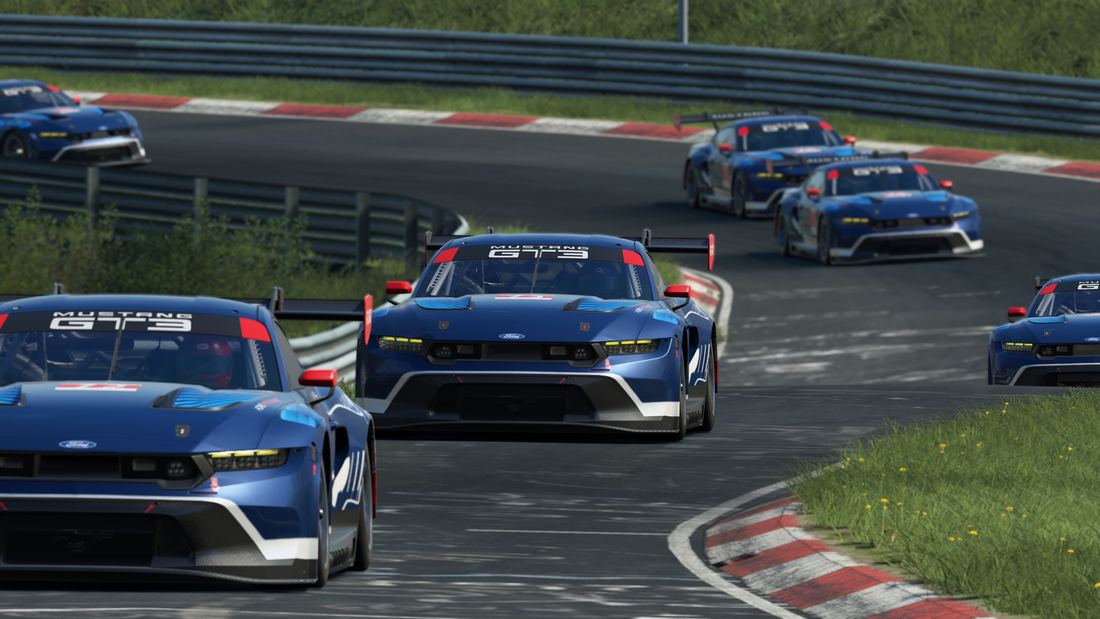
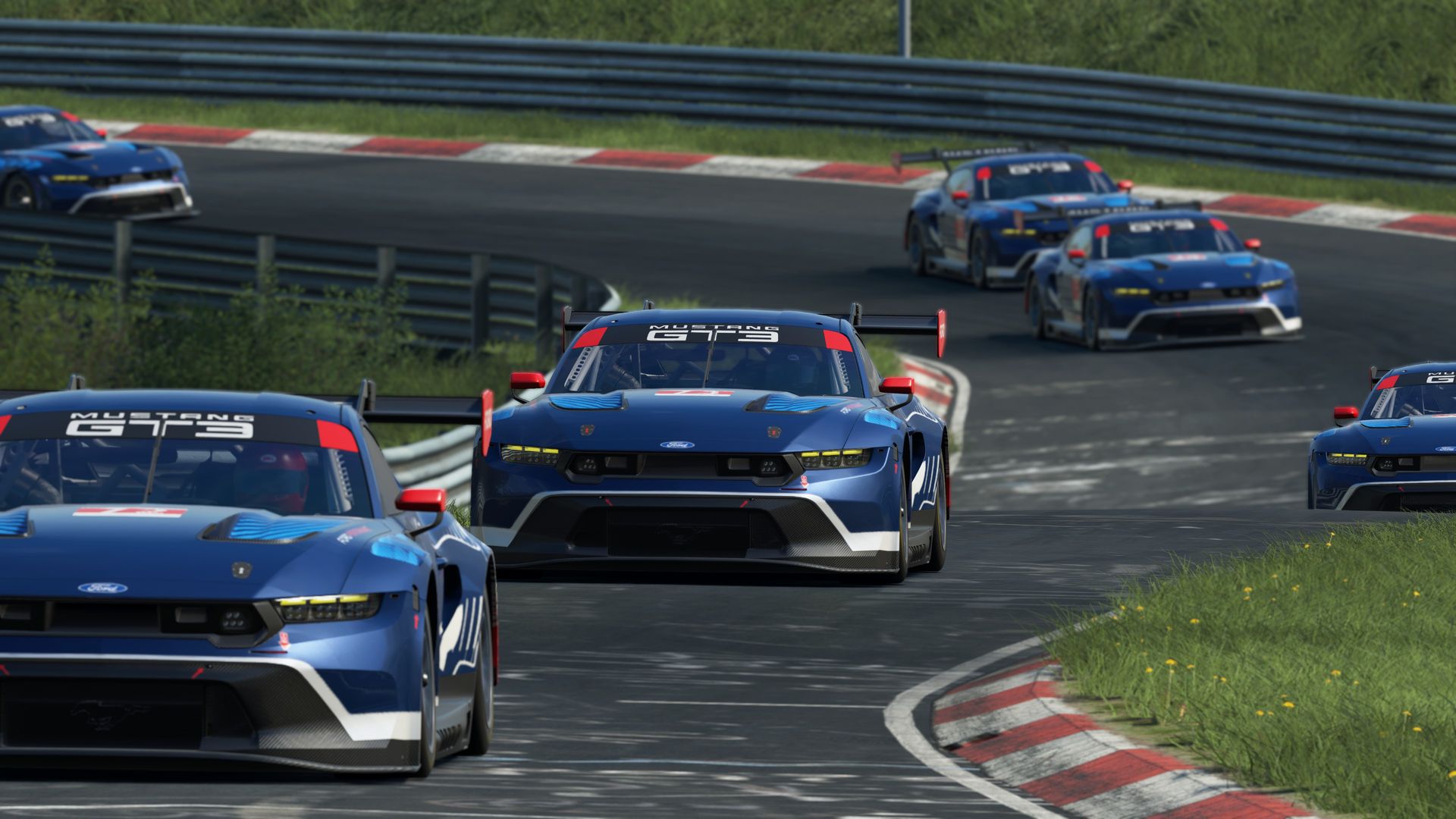
Cinco Mustang GT3 en fila, sin sitio para el error
On track

Nürburgring

Cinco Mustang GT3 en fila, sin sitio para el error

At the Nordschleife you don't win the lap by being fast in 150 corners. You lose it by getting one wrong.
Setup

How to set the car up

The Nordschleife forces you to forget everything that works at a modern circuit. A stiff, low car that would be devastating on the GP layout bounces at Flugplatz here, bottoms out in the Fuchsröhre compression and breaks in the Karussell. You raise ride height above normal and soften springs and bars, even if the telemetry says you're losing.

The aero compromise is just as strange. You need grip for Schwedenkreuz and Kesselchen, but Döttinger Höhe is two and a half kilometres in which anyone running less wing walks past you. In endurance racing you run less downforce than a quick lap wants, because getting past slow traffic is worth more than two tenths a lap.

And there's a variable that doesn't exist elsewhere: fuel. A full lap burns a lot of it, and with a full tank the car compresses more over the jumps and bottoms out where it didn't before. A setup tested on an empty tank can be undriveable on lap 1 of the race.

Cars

Which car to bring here

GT3

It's the headline category of the modern Nordschleife and the one used in the 24 Hours. They have the downforce for the fast corners and the brakes to survive a long lap, but they're heavy, and you feel it over the Pflanzgarten jumps. It's the car to learn the 24H layout in.

Touring cars and GT4

Far easier to read. Being slower, Schwedenkreuz and Flugplatz stop being frightening and you can concentrate on memorising the order of the corners, which is the genuinely hard part. Almost everyone who really learns the Nordschleife starts here.

Road cars

This is what actually laps the Nordschleife on tourist days. With no downforce, the fast corners become an act of faith, and that's exactly how it feels for anyone driving there for the first time in their own car.

Mistakes

What almost everyone gets wrong

  1. Intentar aprenderla de una vez. It's over 150 corners. Nobody memorises them in an afternoon, and long runs at the start only serve to repeat mistakes. Split it into four sections and work them separately.
  2. Forzar la entrada al Karussell. You don't attack the banking: you drop into it. Entering fast and turning breaks the suspension, and in a long race that damage retires you a hundred kilometres later.
  3. Corregir en Flugplatz. The car is airborne or close to it. Any steering input over the crest gets executed on landing, when you no longer want it.
  4. Confiarse en Schwedenkreuz. It's flat, yes — but not on a full tank with cold tyres. It's where most people crash on the first lap of a long race.
  5. Frenar tarde en Bergwerk. You arrive from a descent, the corner tightens and the exit climbs. It has the worst ratio anywhere between what late braking gains you and what overshooting costs you.
  6. Ignoring traffic. In endurance racing you'll be lapping cars constantly. Overtaking at a blind point of the Nordschleife is the mistake that ruins the most races, and the time you gain isn't yours: the risk is.
Practice

How to learn it without frustration

Split the Nordschleife into four sections and work them one at a time. Start with the last one, Pflanzgarten to Döttinger Höhe, because it's the one you'll repeat most in a race and the one that builds confidence fastest. Move on to Hatzenbach, which sets the rhythm of the whole lap, and leave the middle — Fuchsröhre, Bergwerk, Karussell — until you no longer get lost.

Run a slow car first. It sounds counter-intuitive, but in a touring car you have time to read the track, and remembering the corners is what makes you fast later. Anyone who learns straight away in a GT3 memorises frights, not racing lines.

Once you know the lap, do a long run on race fuel without restarting even if you go off. The Nordschleife rewards finishing, not setting a perfect lap, and in the 6 Hours that is literally what decides the result.

Conditions

Rain and night

In the wet

Over 20.8 km it's routine for it to rain in one part of the lap and not another. The forest takes far longer to dry than the open sections, so Wippermann and Brünnchen are still slippery when Döttinger Höhe is already dry. This is where a team-mate's radio call is worth tenths and whole positions.

At night

It's the whole point of endurance racing here. With no artificial light over almost the entire lap, you drive on your headlights and your memory. The daytime visual references vanish and you have to trust the kerbs and the signs. The first night lap of the 6 Hours separates the teams who have practised from the ones who haven't.

Reality and the sim

From the real circuit to Assetto Corsa EVO

El circuito mejor escaneado del mundo

The Nordschleife is probably the most measured stretch of road on the planet. Its laser-scanned reconstruction captures not only the layout but the undulations, the asphalt joints and the changes of gradient, which at this circuit aren't a detail — they're the essence. Assetto Corsa EVO combines that scan with photogrammetry of the surroundings, which is why the trees, the bridges and the marshals' posts are where they should be: they're your references.

Being scanned matters more here than anywhere. In an approximate model, Flugplatz would be just another fast corner; in the scan, the crest unloads the car at exactly the point it does in reality. That's the difference between practising the circuit and practising an imitation.

What you really do learn for the real thing

The order of the corners. It sounds basic and it's the most valuable thing: anyone arriving at the Nordschleife without knowing the sequence spends the first day simply trying not to get lost. With the sim you arrive knowing what comes after each crest, and on a 20 km circuit that's an enormous advantage.

You also learn the fixed references: the Adenauer bridge, the hut at Brünnchen, the Pflanzgarten sign. They're in the same place and work the same way. Plenty of amateur drivers heading there for the first time prepare exactly like this.

Lo que el simulador no te va a dar

Fear. At the real Nordschleife there's no run-off: there's a barrier a metre away and a forest behind it. That consequence completely changes how a person drives, and no simulator reproduces it. At home you're taking Schwedenkreuz flat by the third lap; in reality, almost nobody does that on their first day.

Nor does it give you the real state of the track. In the game the asphalt is always the same; in reality there's damp in the shaded sections mid-morning, leaves in autumn and oil left by the bike that went through before you. And it doesn't give you the fatigue: eight minutes of absolute concentration, lap after lap, tires you in a way you can't understand sitting at home.

Touristenfahrten: the circuit open to the public

The Nordschleife has a quirk almost no other circuit in the world shares: during the Touristenfahrten it operates as a public toll road. Anyone can pay for a lap and drive in with their own road car. That means the track you race in Assetto Corsa EVO is one you can genuinely drive without being a professional.

That's why this page has a double use: if you're going, the sim is your best preparation, and it's worth practising in a car similar to the one you'll drive. And if you're not going, understanding that this is a real road and not a video-game circuit changes the respect you drive it with.

Data

Track data

Official nameNürburgring
LocationNürburg, Renania-Palatinado, Alemania
Nordschleife20.832 km · over 150 corners
Trazado GP5,148 km · 15 curvas
Trazado 24H25,378 km · Nordschleife enlazada con el GP
DesnivelAround 300 metres between the highest and lowest points
Opened1927
ApodoEl Infierno Verde (Jackie Stewart)
Main races24 Horas de Nürburgring, NLS/VLN, DTM en el trazado GP
In Assetto Corsa EVOLaser scanned · GP, Sprint, Nordschleife and 24H
This isn't about being brave. It's about finishing.
History

Where it comes from

Built between 1925 and 1927 in the Eifel region as a public works project against unemployment, the original layout measured over 28 km counting Nordschleife and Südschleife together. Jackie Stewart christened it the Green Hell, and the name stuck.

Formula 1 stopped racing on the Nordschleife after Niki Lauda's accident in 1976, and the modern GP circuit was built alongside it in 1984. Today the Nordschleife lives off the 24 Hours, the NLS and its public tourist sessions.

History

The moments that made it

1927

Se abre el Infierno Verde

Built as a public works scheme to create jobs in the Eifel, the original complex combined Nordschleife and Südschleife and exceeded 28 kilometres. Nothing like it had been built before, and nothing like it has been built since.

1968

La vuelta imposible de Stewart

In rain and thick fog, Jackie Stewart won the German Grand Prix by four minutes over second place. It was he who named the circuit the Green Hell, and not as a compliment.

1976

El accidente de Lauda

Niki Lauda went off at Bergwerk and his Ferrari burned with him inside it. He survived, but that accident ended Formula 1 at the Nordschleife immediately and for good.

1984

Nace el GP moderno

A new circuit was built next to the old one, short and with wide run-off, so top-level racing could continue. It's the one linked to the Nordschleife today to form the endurance racing layout.

In person

Visiting the real circuit

The Nürburgring is one of the few legendary circuits anyone can drive. During the Touristenfahrten the Nordschleife works as a one-way toll road: you pay for a lap, drive in with your car and go. It isn't a track session with flags and marshals every hundred metres, it's open traffic, which is why you need your head switched on and respect for anyone quicker.

It's in the Eifel, a little over an hour from Cologne and ninety minutes from Frankfurt. The village of Nürburg lives off the circuit: there are workshops, prepared cars for hire and car parks that are a spectacle in themselves on a fine weekend.

The big dates are the 24 Hours in spring, which gathers over a hundred cars and hundreds of thousands of spectators camped around the track, and the NLS races spread across the season, far cheaper and without the crowds. [Confirm calendar, times and prices on the circuit's official website before travelling.]

Data

Trivia

Questions

Frequently asked

How long is the Nordschleife?

The Nordschleife is 20.832 kilometres. The modern GP circuit is 5.148 km, and the 24H layout linking the two is over 25 km.

Which layout do the 6 Hours use?

El 24H, que enlaza la Nordschleife con el circuito GP. Es el mismo que se usa en las 24 Horas de Nürburgring y el que corremos en nuestro evento de resistencia.

Can you drive the Nordschleife in real life?

Yes. During the Touristenfahrten it operates as a public toll road: you pay for a lap and drive in with your own car. It's open traffic, not a track session.

How many corners does the Nordschleife have?

There's no single official figure because it depends what you count as a corner, but the number quoted is over 150 — which is why you learn it in sections rather than corner by corner.

Which car is best for learning it?

A slow one. In a touring car or a GT4 you have time to read the track and memorise the order of the corners, which is the hard part. In a GT3 you're going too fast to learn.

Why is it called the Green Hell?

Jackie Stewart named it, for how dangerous the track was and for the forest around it. He won there in 1968 in rain and fog by four minutes.

Gallery

Fotos en Nürburgring

Screenshots taken by people from the community in Assetto Corsa EVO.

Cinco Mustang GT3 en fila, sin sitio para el error
NordschleifeCinco Mustang GT3 en fila, sin sitio para el error
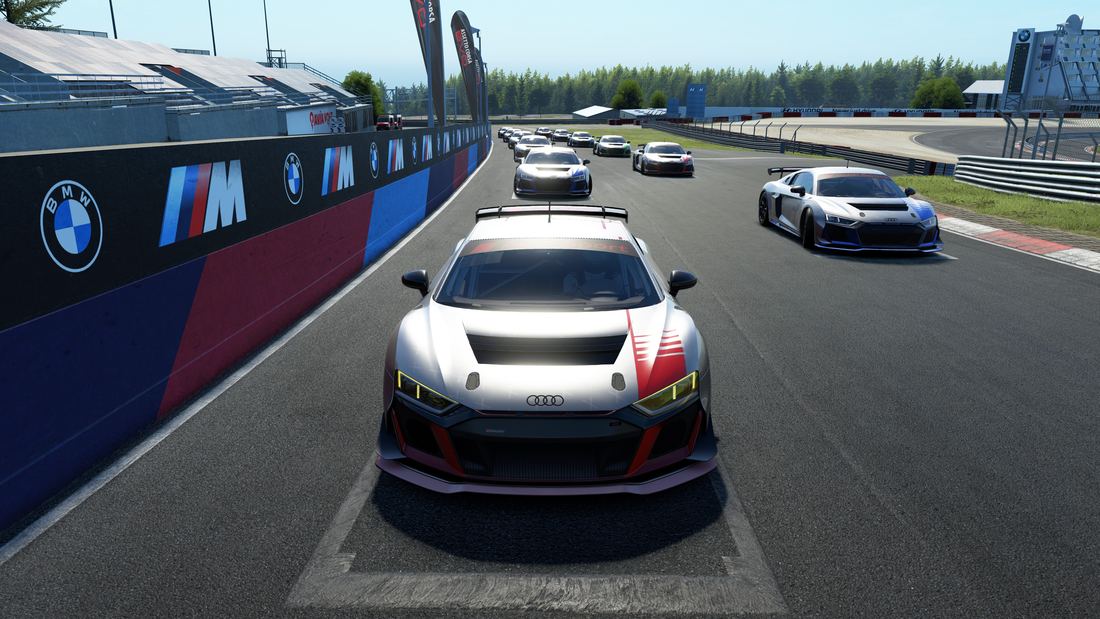
Parrilla de R8 LMS formada antes de la salida
Nürburgring GPParrilla de R8 LMS formada antes de la salida
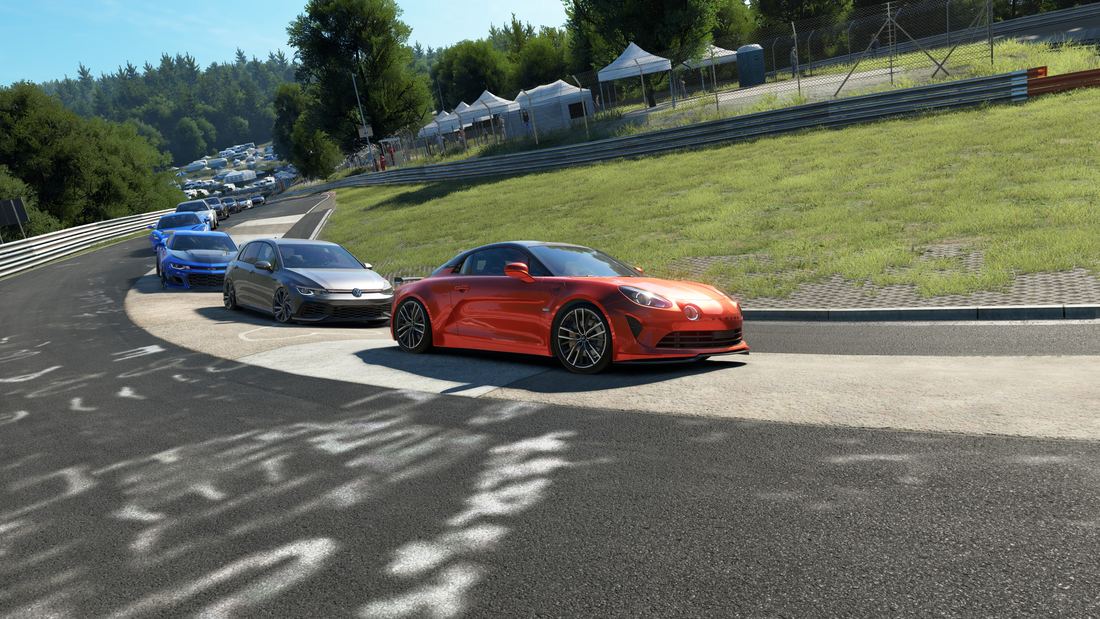
Tanda mixta: coches de calle y deportivos
NordschleifeTanda mixta: coches de calle y deportivos
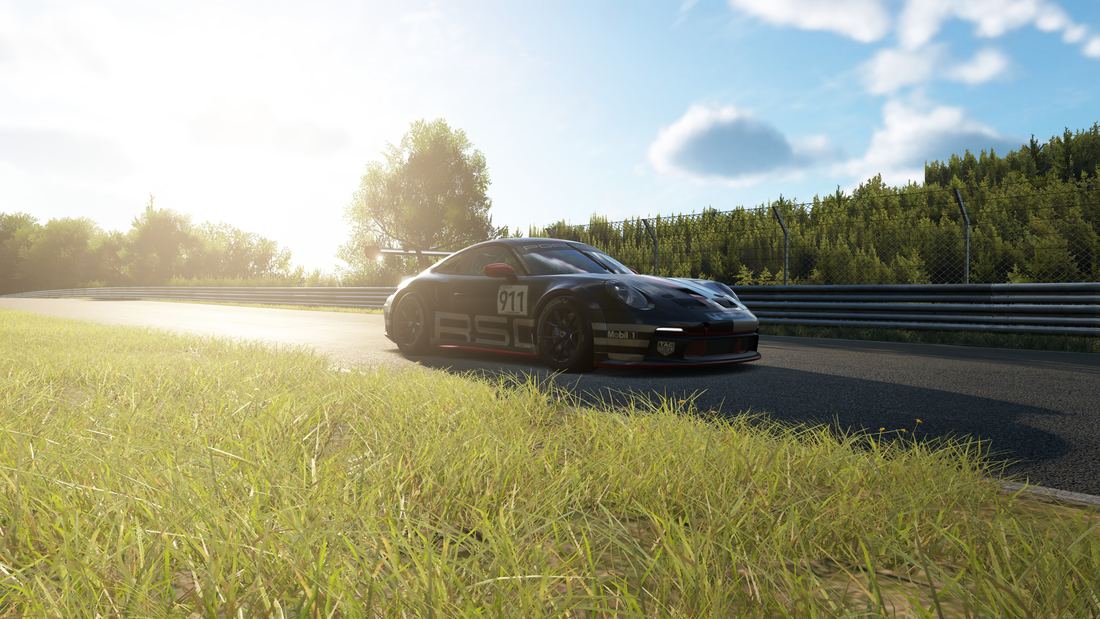
911 GT3 Cup a contraluz sobre la hierba alta
Nordschleife911 GT3 Cup a contraluz sobre la hierba alta
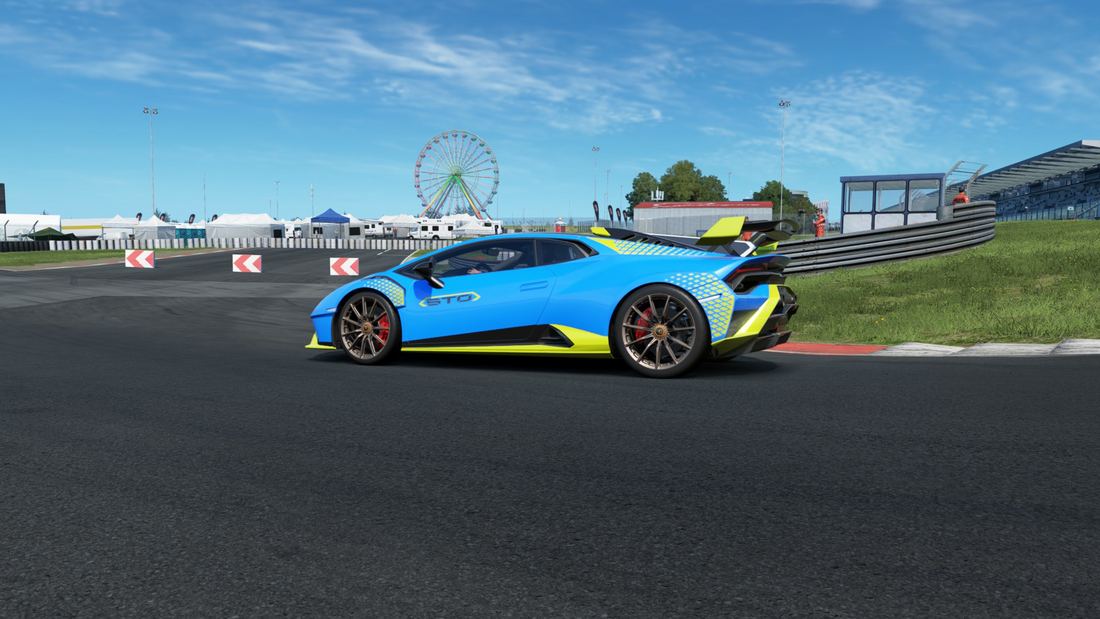
A Huracán STO with the big wheel behind
Nürburgring GPA Huracán STO with the big wheel behind
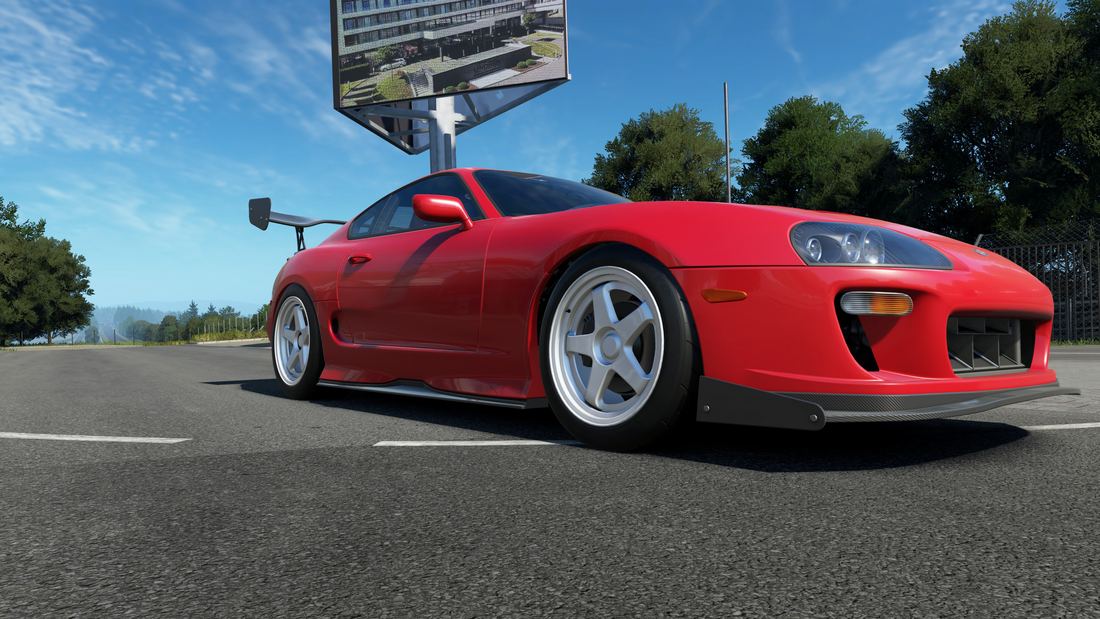
Supra roja esperando a que abra la barrera
NürburgringSupra roja esperando a que abra la barrera
Keep reading

If you like this one, try these

To go faster here

Guides that help you
at this circuit

Race here this week

The Nürburgring is in the 24/7 server rotation. Subscribers vote on each week's track.

See the servers