Assetto Corsa EVOassettocorsaevo.es
Home / Tracks / Fuji Speedway

Fuji Speedway

One of the longest straights in motor racing at 1.5 km, and a narrow, technical final sector. Fuji forces you to choose between top speed and cornering pace.

  • GP
  • Japan
Trazado del circuito de Fuji Speedway
4,563Kilometres
16Corners
ClockwiseDirection
1966Opened
Difficulty to learnMedium
Average speedHigh
Physical demandConsiderable
Punishment for mistakesMedium
How much setup mattersVery high
Ease of overtakingHigh
How it drives

What you'll find

Fuji Speedway is defined by a contrast: it has one of the longest straights in motor racing, close to a kilometre and a half, and a narrow, linked final sector where top speed is worth nothing. That combination turns every race into a setup dilemma: lots of downforce makes you strong in the last sector but leaves you defenceless on the straight, and running light is exactly the opposite. In Assetto Corsa EVO it's an excellent circuit for genuinely understanding what the aero compromise means, because you see it every lap.

Setup here is an uncomfortable compromise: lots of downforce makes you strong in the final sector but leaves you defenceless on the straight, where anyone passes you in the tow. Running light is the reverse. There's no perfect solution, there's a choice.

The final sector — from Dunlop to the hairpin — is slow, narrow and linked. It's where you defend the position you're about to lose on the straight, and where knowing how to place the car wins whole races.

Where the time is

The three keys

01

Turn 1

Braking at the end of 1.5 km. Long distance and a tow: easy to overshoot.

02

Sector 3

Linked and slow. Rhythm here makes up for a lack of top speed.

03

Panasonic

The final hairpin. The exit decides who passes you on the straight.

Lap guide

Sector by sector

How the lap unfolds from start to finish, with the lines and the places where time is genuinely won and lost.

Trazado de Fuji SpeedwayS1

Sector 1 · La recta y la primera curva

The lap starts on the main straight, enormously long and slightly uphill. You reach turn 1 at maximum speed and in the tow, which makes it the clearest overtaking point and also the most dangerous on the opening lap: your braking distance changes a lot when you're tucked in behind another car.

Turn 1 is a wide right that tightens, so arriving too fast costs you not only the corner but the whole exit into the middle sector.

Trazado de Fuji SpeedwayS2

Sector 2 · La zona media

The middle section chains medium and fast corners on a decent width of track. It's where you recover part of what running light costs you, and where the car's balance shows.

The descent to Dunlop and the link after it are crucial because they set your entry speed into the final sector, which hides the most time.

Trazado de Fuji SpeedwayS3

Sector 3 · The technical final sector

The last sector is completely different: narrow, slow and linked, with corners that demand precision and traction. There's no room to overtake here, so it becomes an exercise in defending position.

Everything ends at the Panasonic hairpin, which opens onto the main straight. A good exit there is the only thing that stops you being passed over the following kilometre and a half, which is why it's the circuit's most important corner despite being the slowest.

Glossary

Every corner, one by one

What each corner is called, what type it is and what it asks of you.

NºNameTypeWhat it asks for
1Turn 1Derecha amplia que cierraBraking from maximum speed. The overtake.
2Coca-ColaMedium rightEnlace hacia la zona media.
3100RFast rightApoyo largo, castiga el coche nervioso.
4HairpinHorquilla lentaExit traction into the descent.
5300RVery fast rightFlat with downforce. Intimidating on low wing.
6DunlopMedium leftEntry to the technical sector.
7-9Sector finalEncadenado lentoEstrecho y preciso. No se adelanta.
10PanasonicHorquilla finalLa salida decide toda la recta principal.
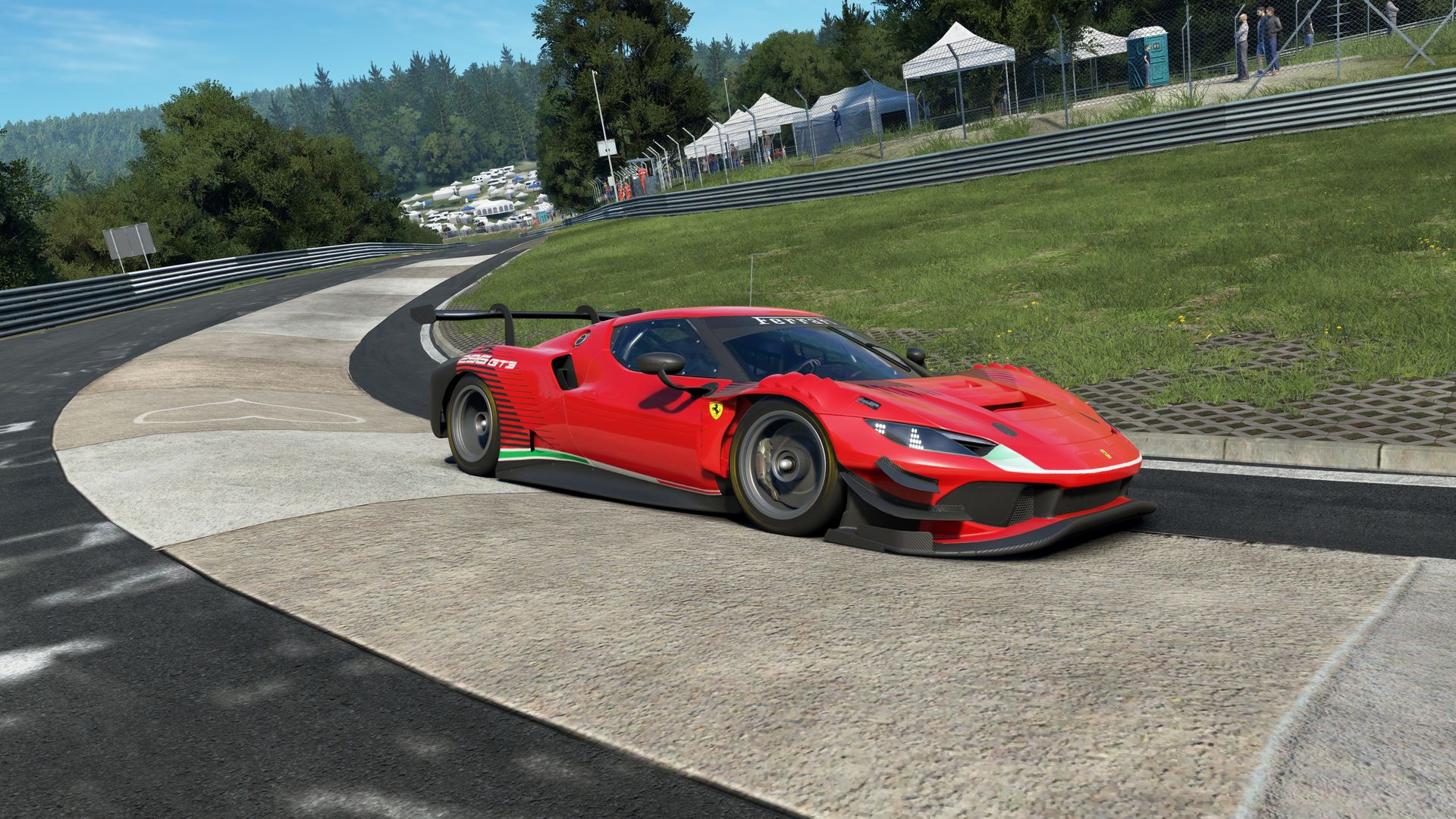
296 GT3 apurando el exterior del piano
Community

Fuji Speedway

Taken at Nordschleife · 296 GT3 apurando el exterior del piano

A kilometre and a half of straight and a pocket-sized final sector. Fuji makes you choose what you want to be good at.
Setup

How to set the car up

Fuji is the circuit of compromise. With a kilometre and a half of straight, every point of wing costs dearly; with a linked final sector, every point you remove is paid for in traction and grip. There's no correct configuration: there's the one that fits how you drive and whether you'd rather attack or defend.

In a race the decision usually tips towards less downforce, because being able to overtake on the straight is worth more than two tenths a lap in sector 3. In qualifying, the reverse.

Traction out of the final hairpin deserves special attention. It's the corner that feeds the straight, so a differential and a balance that help you exit cleanly are worth more than any aero adjustment.

Cars

Which car to bring here

Prototipos y GT3

The WEC's 6 Hours of Fuji is its race. The contrast between straight and technical sector produces very tactical racing.

Monoplazas

The straight generates enormous slipstreams and constant overtaking at turn 1.

Touring cars and GT4

Very good here: the final sector levels things out and the straight lets you recover places, so the racing comes out close.

Mistakes

What almost everyone gets wrong

  1. Frenar por instinto en la curva 1. In the tow your braking distance stretches. It's where most first-lap contact happens.
  2. Montar demasiada carga. Da confianza en el sector final y te condena a ser adelantado en cada recta. En carrera casi nunca compensa.
  3. Descuidar la salida de la Panasonic. It's slow and looks unimportant, but it defines a kilometre and a half of straight.
  4. Entrar pasado en 300R. On low downforce that corner stops being free, and plenty of people find out too late.
  5. Pelear en el sector final. It's narrow and there's no room. Attempts there end in contact and a penalty.
Practice

How to learn it without frustration

Spend your first runs trying very different wing configurations and time not just the lap but your speed at the end of the straight. Fuji is the perfect circuit for understanding the aero compromise, and that lesson applies everywhere else.

Work the final sector in isolation. It hides the most time and is the least like the rest of the circuit: these are precision corners, not speed corners.

Practise attacking and defending at turn 1 in traffic. It's where all your races here will be decided, and braking well with someone glued to you is a trainable skill.

Conditions

Rain and night

In the wet

Fuji is famous for its changeable weather: the mountain generates sudden fog and rain. In the wet the main straight carries an aquaplaning risk and the final sector becomes very delicate for lack of grip in slow corners.

At night

The endurance races finish at dusk. The straight is well lit but the final sector goes darker, and its linked corners demand different references from the daytime ones.

Reality and the sim

From the real circuit to Assetto Corsa EVO

El circuito de Toyota, medido

Fuji was completely rebuilt in 2005 under Toyota's ownership, so its asphalt is modern and uniform, which makes the difference between modelling and scanning less dramatic than at an old circuit. Even so, the scan captures the slight climb on the main straight, which affects real top speed.

The surroundings, with Mount Fuji behind when the sky allows, are reproduced by photogrammetry and are the circuit's signature visual reference.

What carries over well

Everything to do with setup. The logic of the aero compromise is identical and the conclusions you reach in the sim hold on a real track.

Also the turn 1 braking references, which are clear and marked the same way in both worlds.

What doesn't carry over

The weather. Fuji's conditions are notoriously unstable because of the mountain, with fog that can stop races. The game only reproduces it if you configure it deliberately.

And the perceived speed on the straight. A kilometre and a half at maximum speed feels very different in the car, mainly because of the noise and the vibration.

Visitar Fuji

The circuit sits at the foot of Mount Fuji, in Shizuoka Prefecture, about two hours from Tokyo. It's a tourist area in its own right and the circuit runs track days and events all year.

The big date is the WEC's 6 Hours of Fuji, in autumn. With luck and good weather it's run with a snow-capped Mount Fuji behind, one of the most recognisable sights in motor racing. [Confirm dates and tickets on the official website.]

Data

Track data

Official nameFuji Speedway
LocationOyama, Shizuoka Prefecture, Japan
Length4,563 km
Corners16
DirectionClockwise
Recta principalAproximadamente 1,475 km
Opened1966
PropietarioToyota
Main races6 Horas de Fuji (WEC), Super GT, Super Formula
In Assetto Corsa EVOLaser scanned, current layout
No hay reglaje perfecto en Fuji. Hay decisiones, y cada una tiene su precio.
History

Where it comes from

Fuji opened in 1966 with an American-style banking that proved too dangerous and was abandoned early. The layout was redesigned and hosted the Japanese Grands Prix of 1976 and 1977.

Toyota bought it and rebuilt it completely in 2005. Today it hosts the WEC's 6 Hours of Fuji, with Mount Fuji behind when the sky allows.

History

The moments that made it

1966

Se abre con un peralte

The original layout included an American-style banking that proved too dangerous and was abandoned early.

1976

Formula 1 and the title in the rain

The Japanese Grand Prix was run here in a downpour, with Niki Lauda withdrawing and James Hunt taking the championship.

2005

Toyota lo reconstruye

The circuit was completely rebuilt, with new asphalt and a revised layout, to bring back top-level international racing.

Today

Cita del Mundial de Resistencia

The 6 Hours of Fuji is a permanent WEC round, and the circuit also hosts Japan's Super GT.

In person

Visiting the real circuit

Fuji Speedway sits at the foot of Mount Fuji, about two hours from Tokyo by train and bus. The area is a destination in its own right, with lakes, hot springs and views of the mountain when the weather cooperates.

The circuit runs track days, driving schools and club events for much of the year, alongside its national and international racing calendar.

The big date is the WEC's 6 Hours of Fuji, in autumn, with a very Japanese atmosphere and tickets far more affordable than Formula 1's. [Confirm dates and prices on the circuit's official website.]

Data

Trivia

Questions

Frequently asked

How long is the Fuji circuit?

It's 4.563 kilometres with 16 corners. Its main straight, close to a kilometre and a half, is one of the longest in motor racing.

How much downforce do you run at Fuji?

It depends whether you're prioritising attack or defence. With the straight this long, running light lets you overtake; with more downforce you're faster in the final sector. There's no right answer: it's the circuit of compromise.

Where do you overtake at Fuji?

Casi siempre en la curva 1, al final de la recta principal. El sector final es demasiado estrecho y lento para intentarlo.

Who owns the Fuji circuit?

Toyota, which bought it and rebuilt it completely in 2005.

Can you see Mount Fuji from the circuit?

Yes, when the sky is clear. It's the track's signature image, though the area's weather is very changeable.

What races are held at Fuji?

The WEC's 6 Hours of Fuji, Japan's Super GT and Super Formula, among others.

Gallery

Community shots

Screenshots taken by the community in Assetto Corsa EVO. Each caption says which circuit it's from.

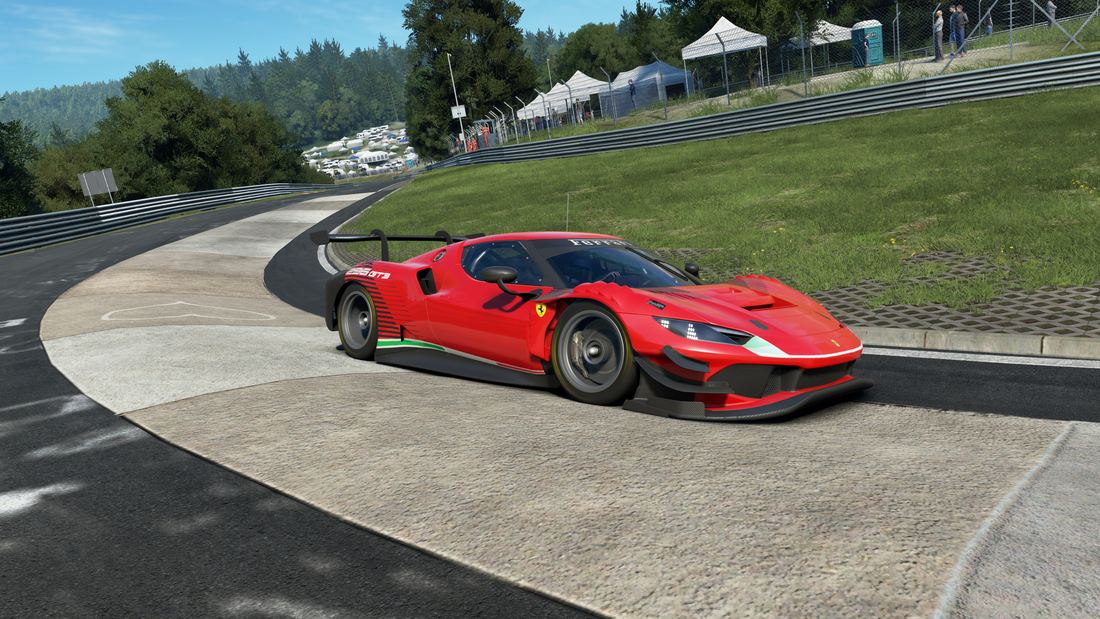
296 GT3 apurando el exterior del piano
Nordschleife296 GT3 apurando el exterior del piano
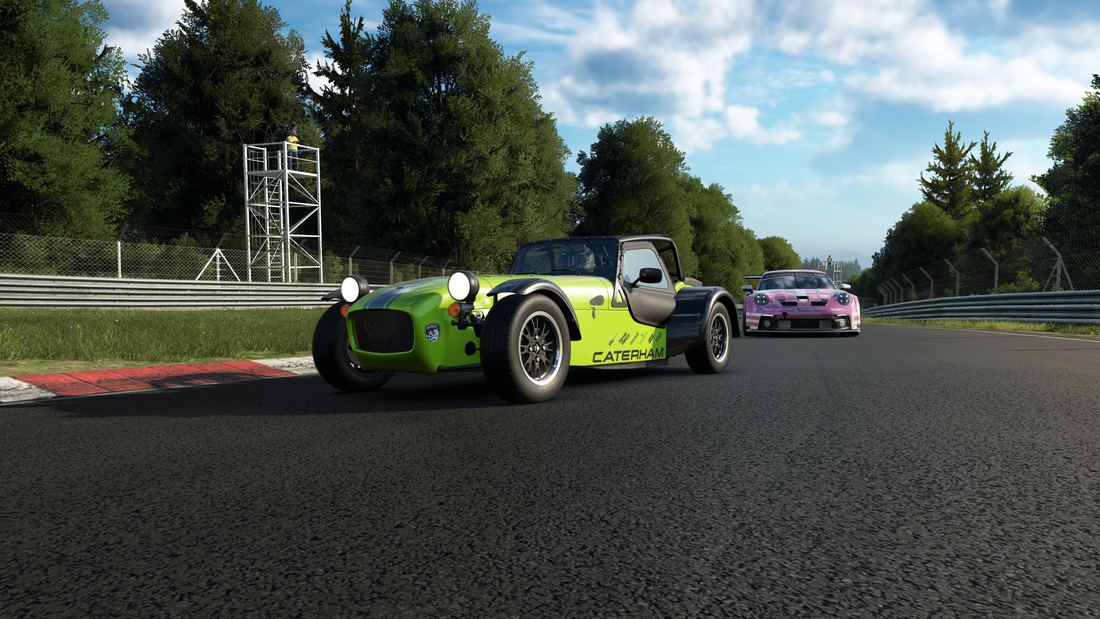
Un Caterham y un 911 Cup compartiendo tanda
NordschleifeUn Caterham y un 911 Cup compartiendo tanda
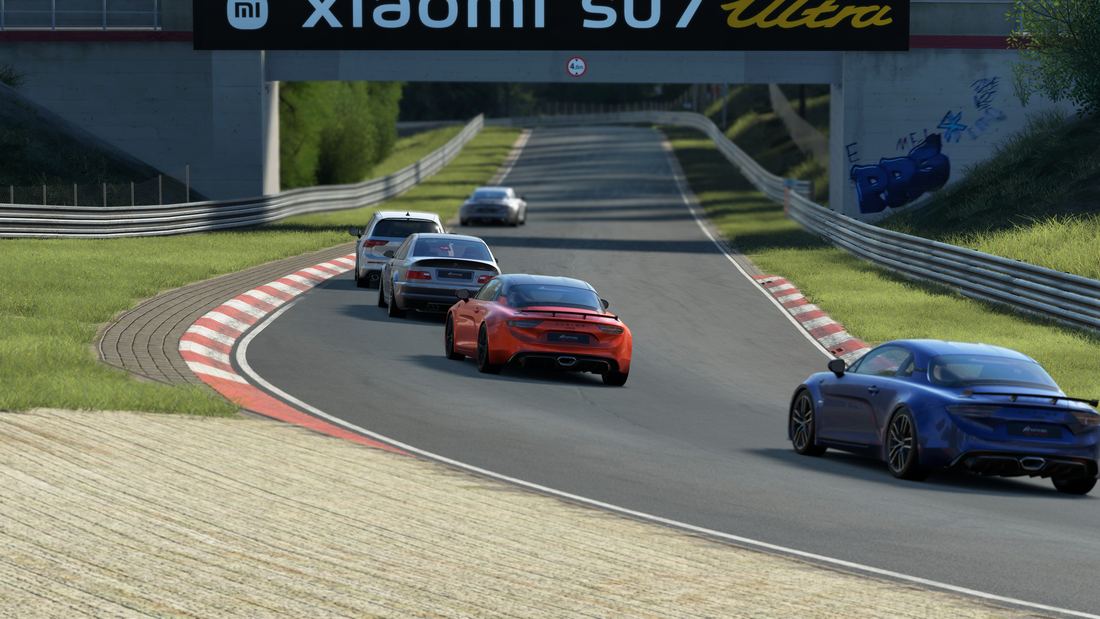
En tren por debajo del puente
NordschleifeEn tren por debajo del puente
Keep reading

If you like this one, try these

To go faster here

Guides that help you
at this circuit

Race here this week

Fuji Speedway is in the 24/7 server rotation. Subscribers vote on each week's track.

See the servers