Assetto Corsa EVOassettocorsaevo.es
Home / Tracks / Monza

Monza

The Temple of Speed: kilometre-long straights, braking from 340 to 80 and an aero setup that works nowhere else on the calendar.

  • GP
  • Italia
Trazado del circuito de Monza
5,793Kilometres
11Corners
ClockwiseDirection
1922Opened
Difficulty to learnLow
Average speedMaximum
Physical demandMedium
Punishment for mistakesHigh
How much setup mattersVery high
Ease of overtakingVery high
How it drives

What you'll find

Monza is the odd one out on the calendar because it rewards the exact opposite of everywhere else. Cornering grip isn't king here — top speed is, and that forces you to build the car in a way that suits no other track: wings on minimum, suspension soft enough to swallow the enormous chicane kerbs, and brakes ready to haul you from 340 to 80 km/h three times a lap. In Assetto Corsa EVO you feel the difference from your first run: the car is blisteringly quick in a straight line and moves around far more than you're used to the moment you touch the brake.

Monza is driven with downforce on minimum, and that changes the whole car. You fly down the straight and then arrive at the Variante del Rettifilo with a car that brakes worse and moves more than you expect. Running straight on at the first chicane is the most repeated mistake of the opening lap.

The Lesmos and Ascari are what separate people: they demand confidence with very little downforce and punish oversteer the moment you get on the throttle. The Parabolica opens up on exit, so sacrificing entry to be fired down the main straight almost always pays.

Where the time is

The three keys

01

Variante del Rettifilo

The heaviest braking zone on the calendar. Pick a reference and don't move it: the slipstream lies to you about distance here.

02

Ascari

A triple change of direction. You gain on the second apex, not the first.

03

Parabolica

A long exit onto the straight. Every tenth here multiplies down the pit straight.

Gallery

Monza in the community

Monza en Assetto Corsa EVO
Lap guide

Sector by sector

How the lap unfolds from start to finish, with the lines and the places where time is genuinely won and lost.

Trazado de MonzaS1

Sector 1 · Rettifilo and the Curve di Lesmo

The pit straight feeds into the Variante del Rettifilo, the most violent braking zone of the year: you arrive at over 340 km/h and have to be below 90 to make the chicane. In the slipstream the distance deceives you, which is why this is where most first-lap contact happens in any race. Fix your reference and leave it alone.

After that, the Curva Grande is a very long right-hand sweep taken close to flat, leading into the Variante della Roggia, another chicane where the inside kerb is used in full. The two Lesmos are the sector's confidence exam: two fast, blind rights where, with little downforce, the rear gives you almost no warning.

Trazado de MonzaS2

Sector 2 · Ascari and the back straight

The Variante Ascari is the best corner on the track and where most time is won or lost. It's a triple left-right-left change of direction that has to be taken as a single sequence: the classic error is nailing the first apex and arriving badly at the second — which is the one that matters, because the back straight comes off it.

Out of Ascari comes the run to the Parabolica, another very long flat-out stretch where the tow is again the main character. If you got Ascari wrong, you pay for it watching the car behind pull alongside without breaking sweat.

Trazado de MonzaS3

Sector 3 · Parabolica and back to the line

The Parabolica — officially Curva Alboreto today — is a very long right that gradually opens out. You enter trail-braking, with the car loaded, and feed the throttle in progressively from the mid-point. Everything you gain on its exit multiplies over the kilometre of pit straight that follows, so trading entry for exit almost always pays.

It's also the last place to defend. Anyone reaching the Parabolica with a car glued to their gearbox knows they'll be passed at the Rettifilo unless the exit is perfect, and that tension is what makes racing at Monza so good to watch.

Glossary

Every corner, one by one

What each corner is called, what type it is and what it asks of you.

NºNameTypeWhat it asks for
1-2Variante del RettifiloChicane lentaThe heaviest braking of the lap. Fixed reference — the tow deceives.
3Curva GrandeVery fast rightNearly flat. With low downforce, little warning.
4-5Variante della RoggiaChicane lentaPiano interior entero. Frenar recto.
6Prima Variante di LesmoFast rightBlind, with the wall on the outside. Precise entry.
7Seconda di LesmoFast rightExit onto a straight: exit speed is everything.
8Curva del SerraglioFast leftFlat-out link under the bridge.
9-11Variante AscariFast triple changeWon on the second apex, not the first.
12Curva Alboreto (Parabolica)Derecha largaTrail brake in, progressive exit onto the straight.
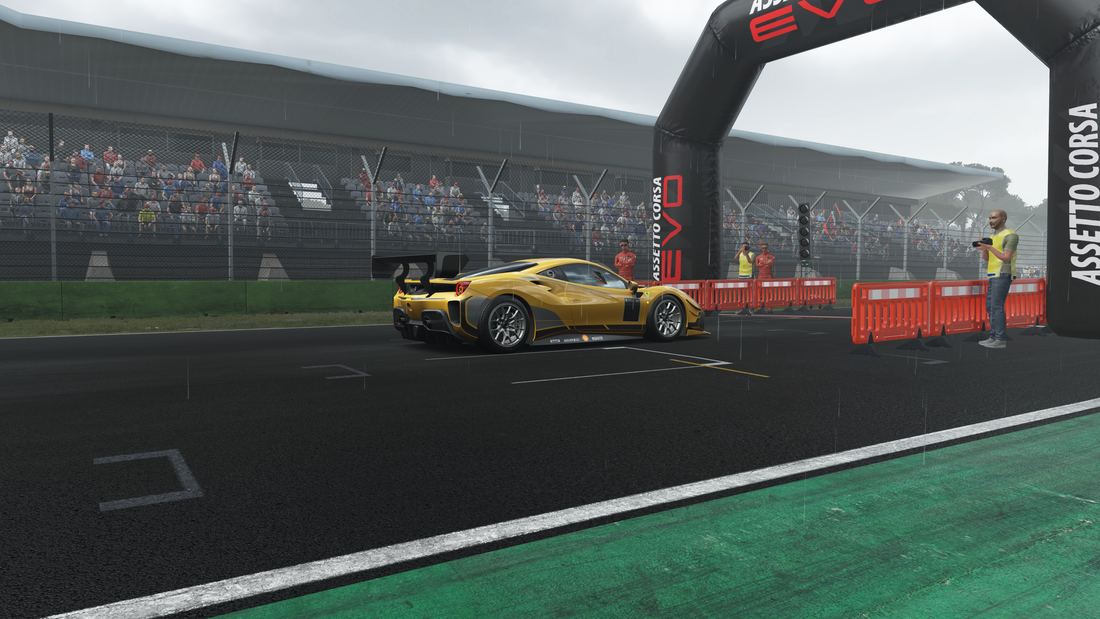
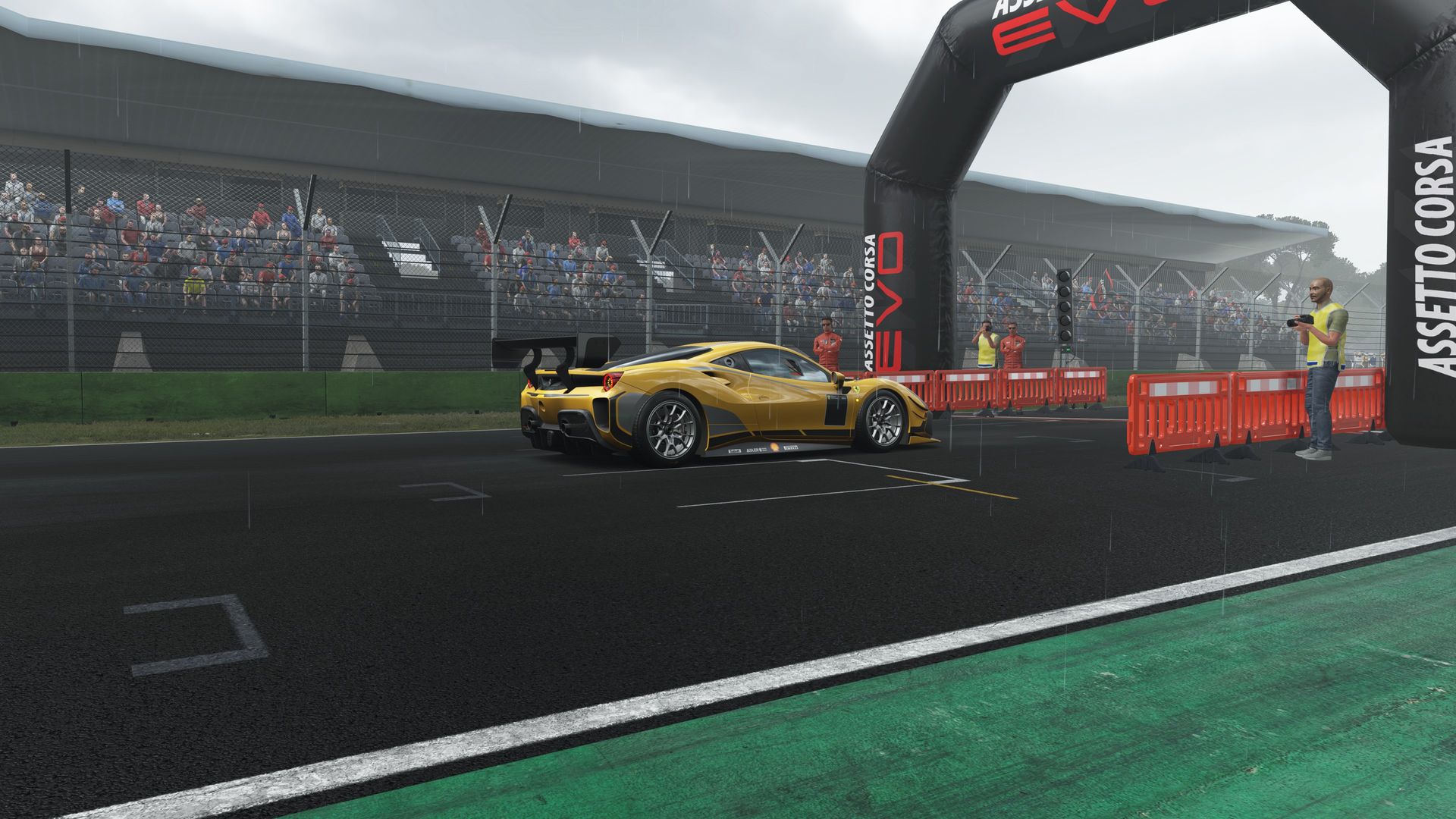
A wet start with the marshals on the wall
On track

Monza

A wet start with the marshals on the wall

At Monza the quick car isn't the one that corners best. It's the one that holds you back least on the straight.
Setup

How to set the car up

Monza is run with downforce on minimum, and you have to accept what that means: the car turns in worse, brakes worse and moves more. Plenty of people bolt on more wing than they should because it feels comfortable, then spend the race watching everyone go by on the straights. The practical test is simple: if you get passed in the tow with no answer, you're carrying too much wing.

The suspension has to swallow the kerbs. All three chicanes are taken riding the inside kerb, and a very stiff car skips and loses the rear exactly as you get on the power. Here it's worth going softer than the telemetry suggests and accepting a little roll in exchange for being able to use the kerbs.

The brakes are the other critical area. Three very heavy stops a lap, from maximum speed, with little downforce helping you slow down. In long races you have to watch temperature and wear, and the bias usually sits slightly further forward than elsewhere to steady the entry to the chicanes.

Cars

Which car to bring here

Formula cars and prototypes

This is where the track shines. Huge top speed, enormous slipstreams and spectacular braking. The wing compromise is more extreme than anywhere else, and one extra tenth in the Parabolica turns into several metres by the end of the straight.

GT3

They work very well and make for extremely close racing, because the tow evens out differences in pace. Being heavier, the Rettifilo and Roggia braking zones become the places where position is genuinely decided.

Coches de calle potentes

Monza is probably the best track in the game for a fast road car: few technical corners, plenty of straights and chicanes that are fairly forgiving. It's an ideal place to start racing online without feeling out of your depth.

Mistakes

What almost everyone gets wrong

  1. Overshooting the Rettifilo. The number one first-lap mistake. You arrive in the tow, your usual reference no longer applies and you swallow the chicane. Brake at your own marker even if it feels early.
  2. Running too much wing. It gives confidence in the corners and condemns you on the straights. At Monza it's better to feel slightly uncomfortable through Ascari than to be passed helplessly three times a lap.
  3. Jumping the chicane kerbs. Monza's kerbs are tall. You ride the inside of them in a controlled way; taking them whole at full speed unsettles the car and, in a race, breaks suspension.
  4. Missing Ascari's second apex. Almost everyone concentrates on the entry. But the one that matters is the second change of direction, because your speed down the whole back straight depends on it.
  5. Arriving too fast at the Parabolica. It's long and it opens: a fast entry feels great and ruins the exit. And the exit is worth a kilometre of straight.
Practice

How to learn it without frustration

Monza is learned quickly — it's eight corners — but mastered slowly, because the hard part isn't the line, it's the setup compromise. Spend your first runs trying different wing levels and time not just the lap but your speed at the end of the pit straight.

Practise your braking with someone ahead. It's the only way to get used to the tow changing your stopping distance, which is exactly what will happen in the race. Running alone gives you a pace you won't be able to repeat in a pack.

And practise Parabolica exits in isolation. It's the corner that gives the most return per minute invested: half a tenth there becomes several metres at the line, and the difference between defending and being passed.

Conditions

Rain and night

In the wet

Monza changes completely. The braking zones collect water and the chicane kerbs become no-go areas: touching them in the wet sends the car into the gravel without warning. On top of that, with so little downforce, aquaplaning on the straights is a real danger, so many people add wing compared with their dry setup.

At night

The main areas are well lit, but the run through the Serraglio and the exit of Ascari are darker than they look. The Rettifilo braking reference changes appearance and it's worth re-learning it in night practice before a race.

Reality and the sim

From the real circuit to Assetto Corsa EVO

The Monza park, scanned

Monza is an old circuit with uneven asphalt, and that's exactly what a laser scan captures and an approximate model misses. The joints in the surface, the bumps on the exit of the Roggia and the precise height of the kerbs — very tall and very distinctive — are all measured, which is why the car behaves differently here than at a modern track in the same game.

Photogrammetry of the surroundings adds what makes Monza recognisable: the woodland of the royal park, the main grandstands and, above all, the remains of the banked oval that cross the current layout and are still there, abandoned, in the game as in reality.

What carries over well

The braking references. The distance boards at the Rettifilo are the same and in the same place, and anyone who learns to brake at the 100-metre board in the sim can use exactly that reference in real life. With a circuit of only eight corners, that correspondence is almost total.

The setup concept, too. Monza's logic — trading grip for top speed — is identical in both worlds, and it's one of the few places where a fan can genuinely understand why teams bring a specific configuration here that they use at no other race all year.

What doesn't carry over

The feel of the Rettifilo braking zone. Going from 340 to 80 km/h subjects the body to brutal deceleration, and that force is the information telling a driver how late they can go. Without it, in the sim you brake by visual reference and repetition, which works, but isn't the same thing.

Nor the noise or the vibration. Monza is famous for how it sounds, and riding the chicane kerbs is felt through the whole car. A good force feedback wheel gets you reasonably close, but the hard thump of the kerb is one of those things you only understand on track.

Preparing a visit to Monza

If you're going to drive there, the sim gets you arriving already knowing where the eight corners are and how they link, which is an afternoon's work. What's worth practising is something else: managing the tow and the discipline of braking at your own marker, because in a session with mixed traffic the temptation to go deeper behind another car is enormous.

And if you're going as a spectator, bear in mind the atmosphere is part of the circuit. Monza in September, with the crowd invading the straight when the race ends, is an experience with nothing in common with watching it on television.

Data

Track data

Official nameAutodromo Nazionale di Monza
LocationMonza Park, Lombardy, Italy
Length5,793 km
Corners11
DirectionClockwise
Velocidad puntaOver 340 km/h in the highest-powered categories
Opened1922
ApodoThe Temple of Speed
Main racesGran Premio de Italia, Mundial de Resistencia, GT World Challenge
In Assetto Corsa EVOLaser scanned, current GP layout
The Parabolica isn't won on entry. It's won on exit, and it pays out a thousand metres later.
History

Where it comes from

Built in 1922 in the royal park of Monza, it's one of the oldest permanent circuits still in use. The remains of the 1955 banked oval are still standing, abandoned since the sixties and visible from the current layout.

It has hosted the Italian Grand Prix almost without interruption since the first world championship. The current chicanes were added to rein in top speeds the original layout could no longer safely sustain.

History

The moments that made it

1922

Built in 110 days

The autodrome went up inside the royal park of Monza in a little over three months, and from the start it included a high-speed ring as well as the road course.

1955

The banked oval is born

A high-speed banking was built that combined with the road course to form a circuit of over 10 km. It was abandoned in the sixties as too dangerous, but its remains still stand and cross the current track.

1971

The closest finish in history

The Italian Grand Prix was decided by one hundredth between first and second, with five cars crossing the line inside two tenths. It was the race that brought about the chicanes.

1972

The chicanes arrive

To rein in speeds the layout could no longer safely sustain, the variantes that define the circuit today were added, turning Monza into the brake-and-accelerate track we know.

In person

Visiting the real circuit

Monza sits inside a public park on the outskirts of Milan, and that's its great oddity: you can walk around inside the grounds on almost any day. The circuit runs track days for private drivers for much of the year, as well as club events and vehicle testing.

What almost nobody expects is that you can walk on the abandoned 1955 banked oval. It's still standing, cracked and with grass between the joints, and it's probably the most striking thing any European circuit offers a visitor.

The big date is the Italian Grand Prix in September, with an atmosphere unlike anywhere else on the calendar. It's also one of the most expensive and crowded weekends: to enjoy it in peace, the World Endurance Championship or GT World Challenge rounds are far better value. [Confirm dates and tickets on the circuit's official website.]

Data

Trivia

Questions

Frequently asked

How long is the Monza circuit?

The current layout is 5.793 kilometres with 11 corners — very few for its length, because almost half the circuit is straights.

Why is Monza run with so little wing?

Because around 80% of the lap is spent at full throttle. Every point of downforce costs top speed on three very long straights, and that outweighs what you gain in the handful of fast corners.

Where do you overtake at Monza?

Mainly at the Variante del Rettifilo, at the end of the pit straight, and at the Variante della Roggia. The entry to the Parabolica also works if you got a good exit out of Ascari.

What is the Parabolica?

It's the last corner of the circuit, a long right that opens out onto the pit straight. Since 2021 it has officially been called Curva Alboreto.

Does Monza's banked oval still exist?

Yes. The 1955 banking is still standing, abandoned since the sixties, and its curves cross the current layout. You can visit it on foot.

Is Monza a good circuit to start with?

Yes, it's one of the easiest to learn: only eight corners and obvious lines. The hard part isn't memorising it, it's getting the setup right and not overshooting the chicanes.

Gallery

Photos at Monza

Screenshots taken by people from the community in Assetto Corsa EVO.

A wet start with the marshals on the wall
MonzaA wet start with the marshals on the wall
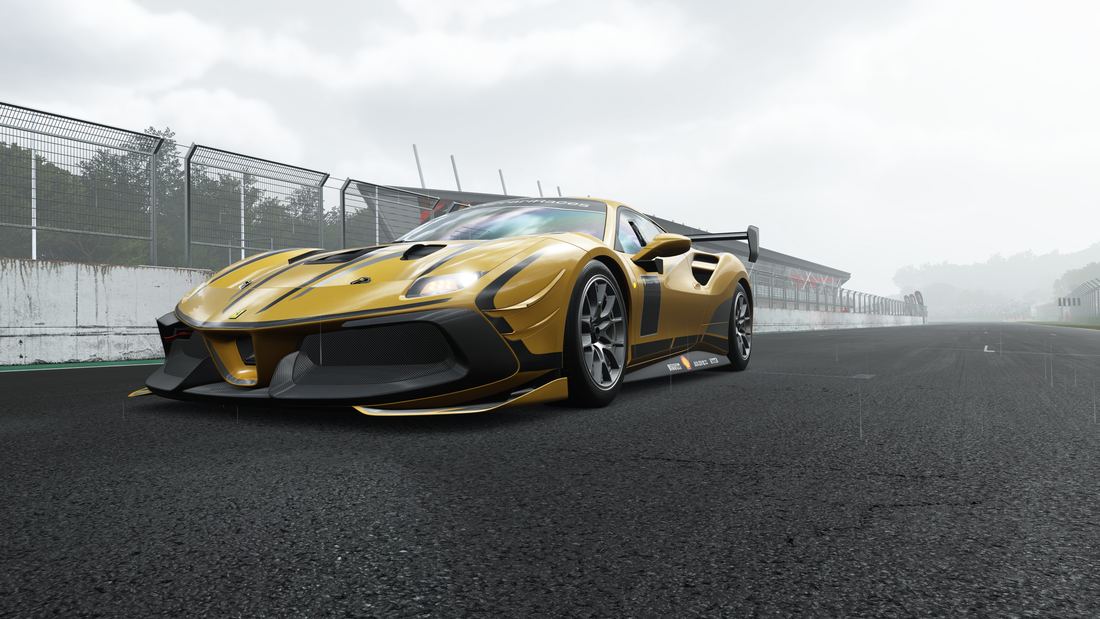
A 488 Challenge in the pit lane under heavy cloud
MonzaA 488 Challenge in the pit lane under heavy cloud
Keep reading

If you like this one, try these

To go faster here

Guides that help you
at this circuit

Race here this week

Monza is in the 24/7 server rotation. Subscribers vote on each week's track.

See the servers