Assetto Corsa EVOassettocorsaevo.es
Home / Tracks / Paul Ricard

Paul Ricard

The circuit of painted run-off: blue and red stripes instead of gravel. Going off doesn't stop you, it slows you, and that's why you learn fast here.

  • GP
  • Francia
Trazado del circuito de Paul Ricard
5,842Kilometres
15Corners
ClockwiseDirection
1970Opened
Difficulty to learnMedium
Average speedHigh
Physical demandConsiderable
Punishment for mistakesLow
How much setup mattersHigh
Ease of overtakingHigh
How it drives

What you'll find

Paul Ricard is the circuit of painted run-off: instead of gravel, it has abrasive surfaces striped blue and red that slow the car progressively. That idea, revolutionary when it was built in 1970, makes it the safest place to learn to drive at the limit, because a mistake has a consequence but not a crash. Its other trademark is the Mistral straight, enormously long and split by a chicane, which opens up two completely different setup strategies. In Assetto Corsa EVO it's an ideal circuit for practising without getting frustrated.

La recta del Mistral es la protagonista. Partida por una chicane, permite dos estrategias distintas de reglaje y da dos zonas de frenada fuerte donde adelantar. La entrada a Signes, al final, se hace casi a fondo y da mucho respeto la primera vez.

The rest of the lap is flat, with wide-radius corners where aero balance rules. With barely any natural references — no elevation, no walls nearby — memorising braking points is harder than at other circuits.

Where the time is

The three keys

01

Signes

Se entra casi a fondo al final del Mistral. Pura confianza en la carga.

02

Chicane del Mistral

Heavy braking halfway down the straight. The clearest overtake.

03

Beausset

Doble derecha en apoyo. La salida define toda la parte final.

Lap guide

Sector by sector

How the lap unfolds from start to finish, with the lines and the places where time is genuinely won and lost.

Trazado de Paul RicardS1

Sector 1 · Salida y la ese de la Verrerie

The lap starts with medium-speed corners taken on rhythm. The Verrerie ess is a fast change of direction where the car needs to be properly balanced, and the run to the Mistral straight comes off it.

There's no great technical difficulty here, but there is an important decision: the speed you carry onto the Mistral defines the whole first half of the lap.

Trazado de Paul RicardS2

Sector 2 · La recta del Mistral y Signes

The Mistral is the circuit's main character. Split by a chicane, it offers two heavy braking zones and allows two setup philosophies: plenty of top speed to attack at the chicane, or more downforce to be strong everywhere else.

At the end of the Mistral comes Signes, a right taken essentially flat. It's one of those corners that impresses you the first time: you arrive at maximum speed and turn almost without lifting, trusting your downforce and nothing else.

Trazado de Paul RicardS3

Sector 3 · Beausset y el sector final

La doble derecha del Beausset es larga y exigente, con el coche cargado durante mucho tiempo. La salida define la velocidad de todo el tramo final.

The final sector chains medium-speed corners with enormous run-off, which encourages you to attack without fear. It's the part people practise most, precisely because a mistake isn't paid for with a crash.

Glossary

Every corner, one by one

What each corner is called, what type it is and what it asks of you.

NºNameTypeWhat it asks for
1Ese de la VerrerieFast direction changeEquilibrio del coche. Prepara el Mistral.
2Curva del CampMedium rightEnlace hacia la recta.
3Chicane del MistralFast chicaneFrenada fuerte a mitad de recta. Adelantamiento.
4SignesVery fast rightCasi a fondo. Pura confianza en la carga.
5-6BeaussetDoble derecha largaApoyo sostenido. La salida manda.
7BendorMedium leftEnlace del sector final.
8GarlabanMedium rightApoyo medio con escapatoria amplia.
9Saint-BaumeIzquierdaIt sets up the final section.
10Pont / Virage du PontChicane finalDevuelve a la recta principal.
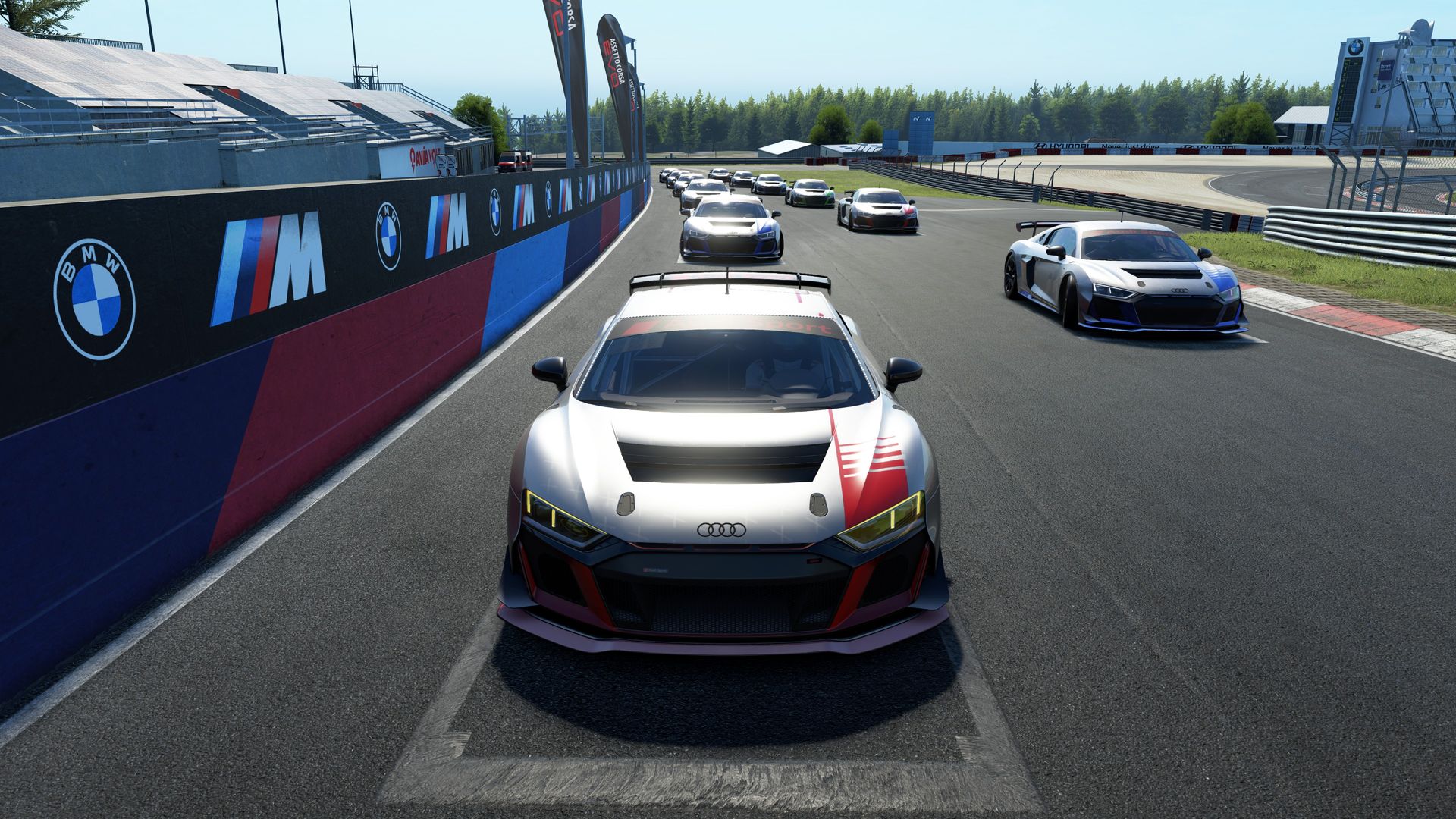
Parrilla de R8 LMS formada antes de la salida
Community

Paul Ricard

Taken at Nürburgring GP · Parrilla de R8 LMS formada antes de la salida

Going off here doesn't stop you: it slows you. And that's why you learn fast at Paul Ricard.
Setup

How to set the car up

The Mistral forces a choice. With the chicane you have two medium straights instead of one enormous one, so the penalty for carrying wing is smaller than it looks; without it, top speed rules. It pays to settle the philosophy before you start fine-tuning.

Signes sets the minimum acceptable downforce: if you can't take it nearly flat with confidence, you've trimmed too much wing. It's a very useful practical check against overdoing the chase for top speed.

Being flat and virtually free of bumps, the suspension can run stiffer than elsewhere, which helps in the sustained-load corners of the final sector.

Cars

Which car to bring here

GT3

It's a regular GT championship venue and the circuit suits them very well: Signes in a GT3 is one of the most satisfying corners in the game.

Prototipos y monoplazas

The combination of a long straight and fast corners suits them perfectly, and the run-off lets you explore the limit without consequences.

Turismos y coches de calle

Highly recommended for learning. It's probably the friendliest circuit in the game for taking your first steps in online racing.

Mistakes

What almost everyone gets wrong

  1. Trimming too much wing. The temptation with a straight like that is enormous, but if Signes stops being nearly flat, you've lost more than you gained.
  2. Pasarse en la chicane del Mistral. You arrive at maximum speed and the braking zone is short. It's the circuit's biggest source of mistakes.
  3. Abusar de las escapatorias. Que no te paren no significa que no te frenen. Las zonas abrasivas cuestan tiempo y en carrera se penaliza salirse repetidamente.
  4. Entrar pasado en Beausset. Es larga y sostenida: ganar entrada arruina toda la salida hacia el sector final.
  5. Confiarse por la falta de referencias. Being flat with no walls nearby, memorising braking points is harder than at a classic circuit. You have to go looking for them deliberately.
Practice

How to learn it without frustration

Take advantage of what other circuits don't give you: here you can explore the limit without wrecking the session. Use Paul Ricard to practise braking at the limit and exits on the edge of grip, because mistakes cost time, not crashes.

Work specifically on the wing compromise, measuring your speed at the end of the Mistral and your time in the final sector. It's an exercise that teaches you a great deal about setup in general.

Hunt for visual references deliberately. Being flat with enormous run-off, it lacks the natural signals of other tracks and you have to work from signs and changes in the colour of the asphalt.

Conditions

Rain and night

In the wet

The abrasive run-off areas turn especially slippery and lose much of their braking function. The Mistral straight, long and flat, carries an aquaplaning risk.

At night

The main areas are well lit and its flat character makes night driving relatively comfortable compared with forest or mountain circuits.

Reality and the sim

From the real circuit to Assetto Corsa EVO

El circuito laboratorio

Paul Ricard was born in 1970 with a revolutionary idea: safety by design, with wide run-off instead of nearby barriers. Today it's also a test centre, and its asphalt and abrasive surfaces are perfectly documented.

The laser scan captures those different surfaces, which is exactly what makes the circuit distinctive: running onto the blue or the red has different, measurable effects, and that's in the game.

What carries over well

Exploring the limit. At a circuit where mistakes don't produce crashes, the way you learn is the same in both worlds, and what you discover in the sim about where your braking limit sits applies directly.

Also the Mistral setup compromise, which is an identical engineering exercise in both cases.

What doesn't carry over

Signes. Tomar esa curva casi a fondo en la realidad requiere una confianza que se construye con vueltas y con conocer el estado de las gomas; en el simulador se puede probar directamente sin coste.

And the real abrasiveness of the run-off: on track it destroys tyres noticeably, something the game models but a driver doesn't perceive until they see the wear.

Visitar Le Castellet

The circuit is in Provence, near Marseille and the Mediterranean coast, in a very attractive tourist area. It operates year-round as a test centre and runs track days and driving schools.

It's one of the best circuits in Europe for a first experience on track, precisely because of its run-off. [Confirm calendar and access on the official website.]

Data

Track data

Official nameCircuit Paul Ricard
LocationLe Castellet, Provenza, Francia
Length5.842 km (GP configuration)
Corners15
DirectionClockwise
What makes it distinctiveEscapatorias abrasivas pintadas de azul y rojo en vez de grava
Opened1970
FundadorEl empresario Paul Ricard
Main racesGT World Challenge, antiguamente Gran Premio de Francia
In Assetto Corsa EVOLaser scanned, GP configuration
Signes se toma casi a fondo. La primera vez que lo haces, no te lo crees.
History

Where it comes from

It was financed by the businessman Paul Ricard and opened in 1970 with what was then a new idea: safety by design, with wide run-off instead of nearby barriers. It hosted the French Grand Prix in the seventies and eighties.

After years as a private test track, it returned to the Formula 1 calendar in 2018. Its abrasive run-off painted blue and red is now a recognisable image of modern motorsport.

History

The moments that made it

1970

Safety by design

Paul Ricard financed a circuit conceived with wide run-off and a modern layout, an idea then unusual in Europe.

1971-1990

El Gran Premio de Francia

The circuit hosted the French race across several spells, alternating with other tracks in the country.

2018

Formula 1 returns

After years as a private test centre, the circuit returned to the world calendar with its signature painted run-off.

Today

Sede del GT europeo

Las 1000 km de Paul Ricard y las rondas del GT World Challenge mantienen el circuito como referencia del automovilismo de resistencia europeo.

In person

Visiting the real circuit

The Circuit Paul Ricard is at Le Castellet in Provence, less than an hour from Marseille and very close to the Mediterranean coast. The area combines a circuit visit with tourism well.

It operates year-round as a test centre and runs track days, driving schools and club events. It's one of the best circuits in Europe for a first time on track, precisely because of its run-off.

La cita grande es la ronda del GT World Challenge, incluidas las 1000 km. [Confirma fechas y accesos en la web oficial del circuito.]

Data

Trivia

Questions

Frequently asked

How long is the Circuit Paul Ricard?

The Grand Prix configuration is 5.842 kilometres with 15 corners, though the circuit supports dozens of different layouts.

Why is Paul Ricard's run-off blue and red?

They're abrasive surfaces designed to slow the car progressively rather than stop it abruptly. Blue slows you less and red more, increasing deceleration the further you get from the track.

Where do you overtake at Paul Ricard?

En la chicane del Mistral, a mitad de la recta larga, y al final del Mistral entrando en Signes si llevas suficiente velocidad punta.

Is Signes flat out?

In a high-downforce car, essentially yes. It's a good check on whether you've over-trimmed the wing: if Signes stops feeling comfortable, you've taken off too much.

Is it a good circuit for learning?

Yes, probably the best in Europe. The abrasive run-off lets you explore the limit without a mistake turning into a crash.

Who was Paul Ricard?

A French businessman, founder of the pastis brand that bears his name, who financed the circuit's construction in 1970.

Gallery

Community shots

Screenshots taken by the community in Assetto Corsa EVO. Each caption says which circuit it's from.

Parrilla de R8 LMS formada antes de la salida
Nürburgring GPParrilla de R8 LMS formada antes de la salida
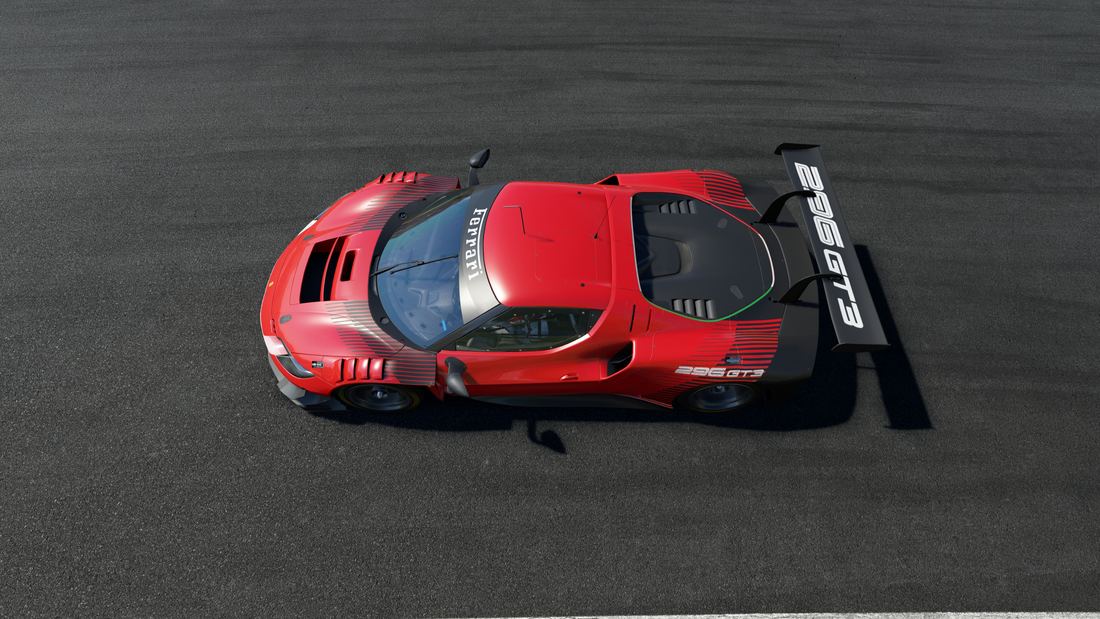
296 GT3 visto desde arriba sobre asfalto limpio
Cenital296 GT3 visto desde arriba sobre asfalto limpio
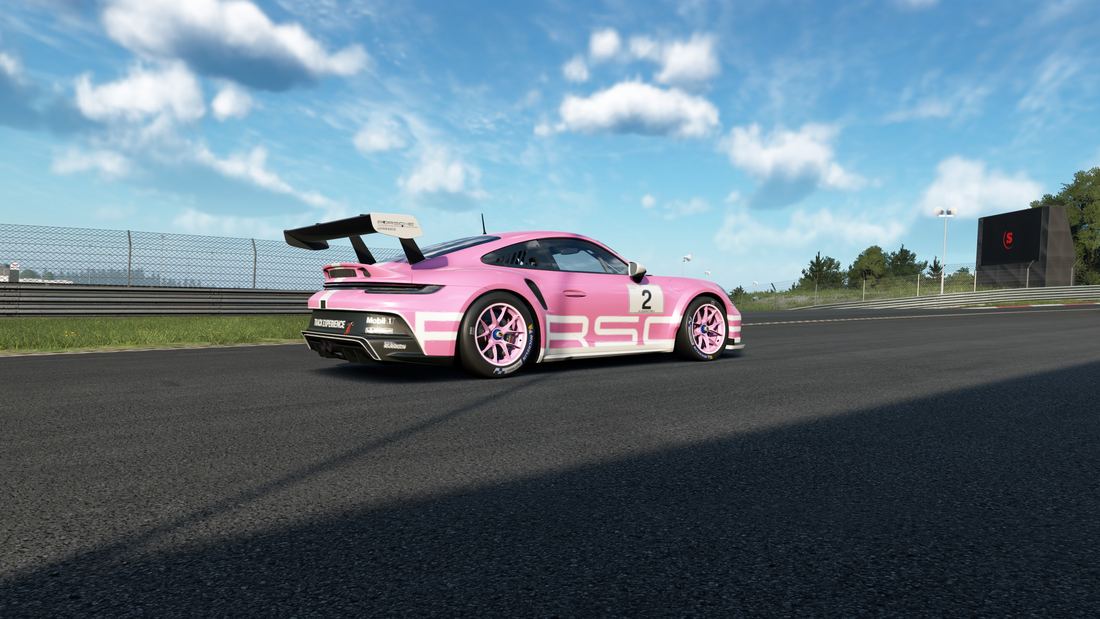
911 GT3 Cup rosa rodando en tanda libre
Nordschleife911 GT3 Cup rosa rodando en tanda libre
Keep reading

If you like this one, try these

To go faster here

Guides that help you
at this circuit

Race here this week

Paul Ricard is in the 24/7 server rotation. Subscribers vote on each week's track.

See the servers