Assetto Corsa EVOassettocorsaevo.es
Home / Tracks / Sebring

Sebring

A former military airfield whose concrete sections are still there. Sebring is the bumpiest circuit on the calendar and the one that breaks the most cars.

  • 12H
  • Estados Unidos
Trazado del circuito de Sebring
6,019Kilometres
17Corners
ClockwiseDirection
1950Opened
Difficulty to learnConsiderable
Average speedHigh
Physical demandMaximum
Punishment for mistakesHigh
How much setup mattersMaximum
Ease of overtakingConsiderable
How it drives

What you'll find

Sebring is a former military airfield and that isn't a footnote: part of the lap still runs over the original concrete slabs of the runways, with expansion joints every few metres. The result is the bumpiest circuit in international motorsport and the one that breaks the most cars. In Assetto Corsa EVO it completely inverts setup logic: what would be fast anywhere else — a low, stiff car — is simply undriveable here, and learning that is half the job.

The bumps dictate everything. A low, stiff setup that would be fast anywhere else makes the car impossible to drive here: it skips, loses grip and throws you off line on the concrete sections.

The layout is long and changes character, with very fast parts and slow technical sections. At night it gains a lot: your headlights pick out the concrete joints and the circuit becomes an exercise in memory and endurance.

Where the time is

The three keys

01

Turn 17

La curva final, bacheada y ciega. Define la recta de meta.

02

Hairpin

A long stop on concrete. Braking in a straight line is half the battle.

03

Sunset Bend

It changes completely at night. Different references from the daytime ones.

Lap guide

Sector by sector

How the lap unfolds from start to finish, with the lines and the places where time is genuinely won and lost.

Trazado de SebringS1

Sector 1 · Salida y las primeras curvas

The lap starts on normal asphalt, with medium-speed corners where the car behaves as you'd expect. It's the deceptive part: lap time here comes from conventional technique and you can convince yourself the circuit is easy.

The change comes when you hit the concrete sections. The surface switches abruptly, the joints appear and the car starts skipping. The fast line stops being the geometric one and becomes the one that avoids the worst bumps.

Trazado de SebringS2

Sector 2 · The concrete sections

This is where Sebring earns its reputation. The car jumps, the wheel moves on its own and you have to drive with loose hands, letting the chassis work. Braking on bumpy concrete is the hardest thing here: it has to be done straight and with margin, because locking a wheel over a joint takes nothing at all.

It's also where cars break. In a long race the accumulated hammering destroys suspension and exhaust systems, and a good share of the 12 Hours retirements are explained right here.

Trazado de SebringS3

Sector 3 · Sunset Bend y vuelta a meta

The last part of the lap returns to asphalt and chains faster corners up to Sunset Bend, the final right onto the pit straight. It's a corner that changes completely from day to night, to the point where many drivers use different references depending on the hour.

A good exit from Sunset Bend is what lets you defend on the straight, and in a twelve-hour race with constant traffic that happens dozens of times.

Glossary

Every corner, one by one

What each corner is called, what type it is and what it asks of you.

NºNameTypeWhat it asks for
1Turn 1Derecha cerradaFrenada de adelantamiento. Asfalto normal.
3-4Curvas 3-4Enlace medioThe last comfortable stretch before the concrete.
5Turn 5DerechaThe concrete surface begins. The car starts moving around.
7HairpinHorquilla lentaA long stop on concrete. Braking straight is the key.
10-12Concrete sectionEnlace bacheadoThe fast line avoids bumps, it doesn't chase geometry.
13Bishop BendMedium rightVuelve el asfalto. Se recupera agarre.
15Turn 15Fast leftPrepara el sector final.
17Sunset BendDerecha largaIt changes a lot from day to night. It defines the pit straight.
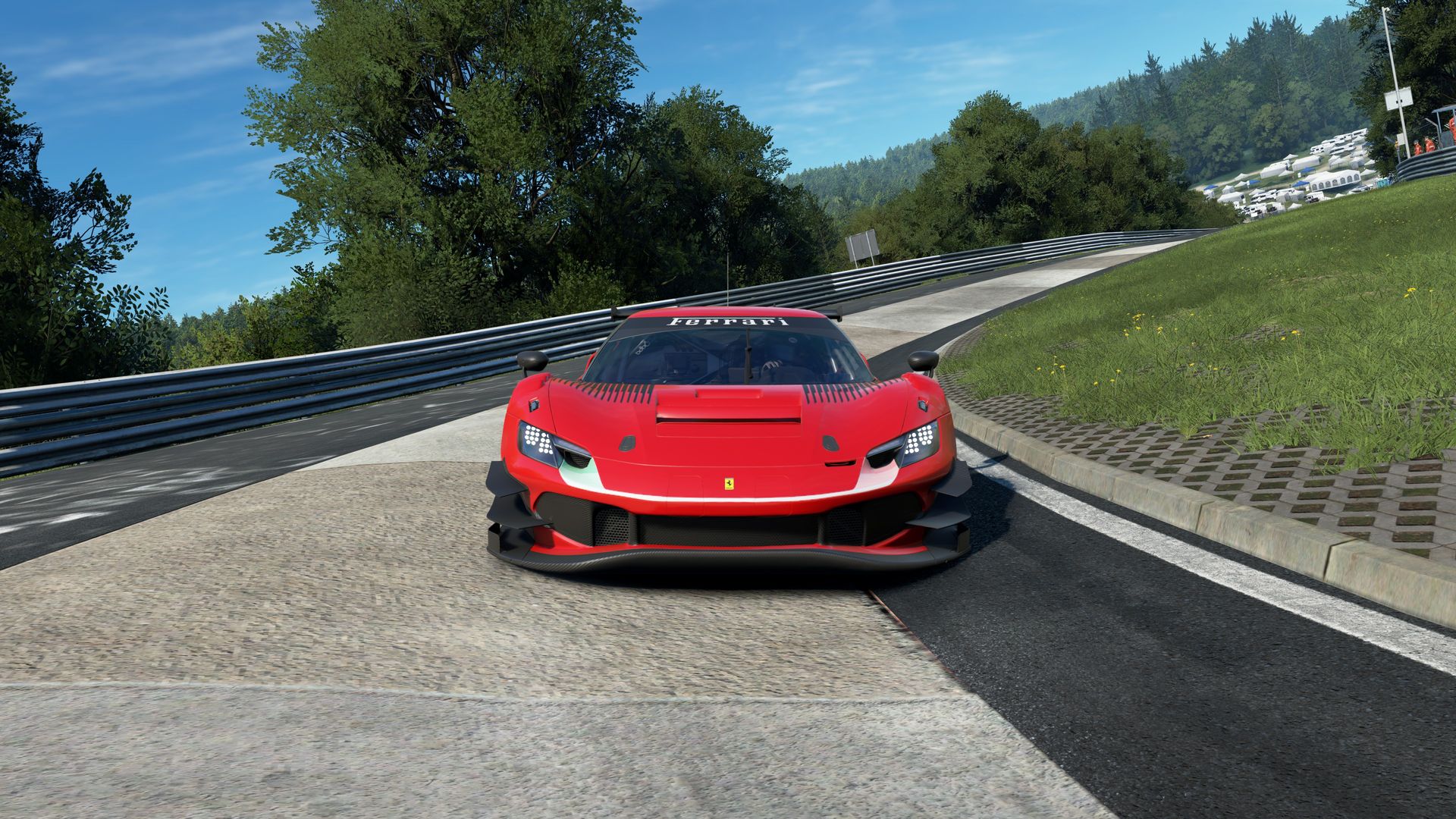
296 GT3 de frente, subiendo hacia el bosque
Community

Sebring

Taken at Nordschleife · 296 GT3 de frente, subiendo hacia el bosque

Sebring isn't won by the fastest car. It's won by the one still in one piece at the eleven-hour mark.
Setup

How to set the car up

Sebring inverts the rules. A low, stiff car — the fast recipe almost everywhere — skips over the concrete joints here, loses contact with the ground and becomes unpredictable. You raise the ride height and soften the suspension, accepting that the telemetry says you're losing: on track you gain.

The dampers matter more than at any other track, because the surface feeds in high-frequency impacts continuously. Too much compression damping makes the car jump instead of absorbing.

In a long race, reliability outranks pace. It's one of the few circuits where running a setup half a second a lap slower that doesn't destroy the car is objectively the right call.

Cars

Which car to bring here

Prototipos

The 12 Hours is their race. They suffer most from the bumps and look most spectacular on the concrete.

GT3

The largest category here and the one that best balances pace with resistance to punishment. It's the most sensible car to learn the circuit in.

Turismos y coches de calle

They suffer less because they're slower, and they let you understand the lap without constantly fighting the bouncing.

Mistakes

What almost everyone gets wrong

  1. Montar el coche como en cualquier otro circuito. It's the number one mistake. Low and stiff doesn't work here, and no amount of driving skill makes up for the wrong setup.
  2. Braking while turning on concrete. Over the joints, any braking with steering lock on ends in a lock-up. You brake straight and turn afterwards.
  3. Chasing the geometric line. The fast line at Sebring isn't the shortest: it's the one that avoids the worst joints. You find it by driving, not by looking at the map.
  4. Atacar desde la primera vuelta en carrera larga. Twelve hours of accumulated hammering destroys the car. Pace has to be managed here.
  5. Using the same references by day and by night. Sunset Bend y la zona final cambian mucho con la luz. Conviene tener dos juegos de referencias.
Practice

How to learn it without frustration

Start with the setup, not the racing line. Spend your first runs raising the car and softening it until it stops skipping; until you have that, any lap time you set is misleading.

Then learn where the bumps are. Drive slowly on purpose, running off the ideal line, to find out which parts of the concrete are better. That information is what gives you time later.

Finish with long runs and, if you can, night runs. Sebring is an endurance circuit and all its real difficulty appears with fatigue, traffic and failing light.

Conditions

Rain and night

In the wet

Wet concrete has far less grip than asphalt, so the circuit splits in two: places where you can drive reasonably and places where you slide. The joints become the main danger.

At night

It's the essence of Sebring. The 12 Hours finishes at night and the circuit, with limited lighting, changes completely. Headlights pick out the concrete joints and many drivers say it's easier to drive at night because you can see the bumps better.

Reality and the sim

From the real circuit to Assetto Corsa EVO

Scanning a 1940s airfield

Sebring is the extreme case of why laser scanning matters. Its surface isn't a road: it's Second World War concrete slabs with joints, steps between panels and decades of patching. No hand-built model would reproduce that, and without it Sebring would be just another circuit.

The fact the game captures the joints explains why setup rules so completely here and why the fast line doesn't match the geometric one.

What carries over well

Setup logic. Understanding that you have to raise and soften the car is exactly what real teams do, and it's a lesson in applied engineering the sim teaches very well.

Also the technique of braking in a straight line. It's a transferable skill Sebring forces you to learn out of necessity.

What doesn't carry over

The physical punishment. Twelve hours on bumpy concrete leaves drivers battered: it's one of the hardest races in the world precisely because of the constant vibration. At home you perceive it visually, not in your body.

Nor real reliability: in the game a badly set-up car goes worse, but at the real Sebring it breaks, and that threat completely changes how you drive.

Visitar Sebring

The circuit is in central Florida, in rural country, and keeps the airfield feel it has: simple facilities and lots of space. The 12 Hours in March is an event with mass camping and a very particular atmosphere.

Outside that week it runs track days and driving schools. Driving on the original concrete is an experience no other international circuit offers. [Confirm calendar and access on the official website.]

Data

Track data

Official nameSebring International Raceway
LocationSebring, Florida, Estados Unidos
Length6,019 km
Corners17
DirectionClockwise
SuperficieA mix of asphalt and concrete slabs from the old air base
Opened1950
OrigenHendricks Field military airfield, Second World War
Main races12 Horas de Sebring (IMSA/WEC)
In Assetto Corsa EVOLaser scanned, the 12 Hours layout
The runway concrete has been there since the Second World War. And you feel it every lap.
History

Where it comes from

The circuit was born in 1950 on the runways of Hendricks Field, used during the Second World War to train bomber crews. That's where the concrete you still drive on comes from.

The 12 Hours of Sebring is, alongside Daytona and Le Mans, one of the classic dates of world endurance racing. Surviving Sebring is considered the best reliability test there is.

History

The moments that made it

1950

La primera carrera

It was run on the runways of the former Hendricks Field airfield, used during the Second World War to train bomber crews.

1952

Nacen las 12 Horas

The endurance race became an annual fixture and soon one of the world's benchmark events alongside Le Mans and Daytona.

1970

La victoria de Mario Andretti

One of the most remembered editions, decided in the closing laps, which cemented the race's reputation for unpredictability.

Today

El examen de fiabilidad

Sebring is still considered the world's toughest test of machinery: teams use it to validate components before Le Mans.

In person

Visiting the real circuit

Sebring is in inland Florida, about two hours from Orlando and Tampa. The circuit keeps its airfield character: functional facilities, plenty of open space and the original concrete slabs in plain view.

The 12 Hours in March is far more than a race: there's mass camping and a festival atmosphere that's part of American motorsport tradition.

Outside that week the circuit runs track days and driving schools. Driving on the concrete of a 1941 runway is a unique experience. [Confirm calendar and access on the circuit's official website.]

Data

Trivia

Questions

Frequently asked

How long is the Sebring circuit?

It's 6.019 kilometres with 17 corners. A good part of the lap runs over the old airfield's concrete slabs.

Why is Sebring so bumpy?

Because it was built on the runways of a Second World War air base, and it's still raced on those concrete slabs and their joints.

How should you set the car up at Sebring?

With more ride height and softer suspension than usual. A low, stiff car skips over the joints and becomes impossible to drive.

What is the 12 Hours of Sebring?

An endurance race run since 1952, considered alongside Daytona and Le Mans one of the world's classic events and the toughest reliability exam there is.

Is there night racing at Sebring?

Yes. The 12 Hours starts in the morning and finishes at night, and the change of light forces different references, especially at Sunset Bend.

Where do you overtake at Sebring?

At turn 1 and the hairpin, the two heavy braking zones. On the concrete sections overtaking is risky because of the bumps.

Gallery

Community shots

Screenshots taken by the community in Assetto Corsa EVO. Each caption says which circuit it's from.

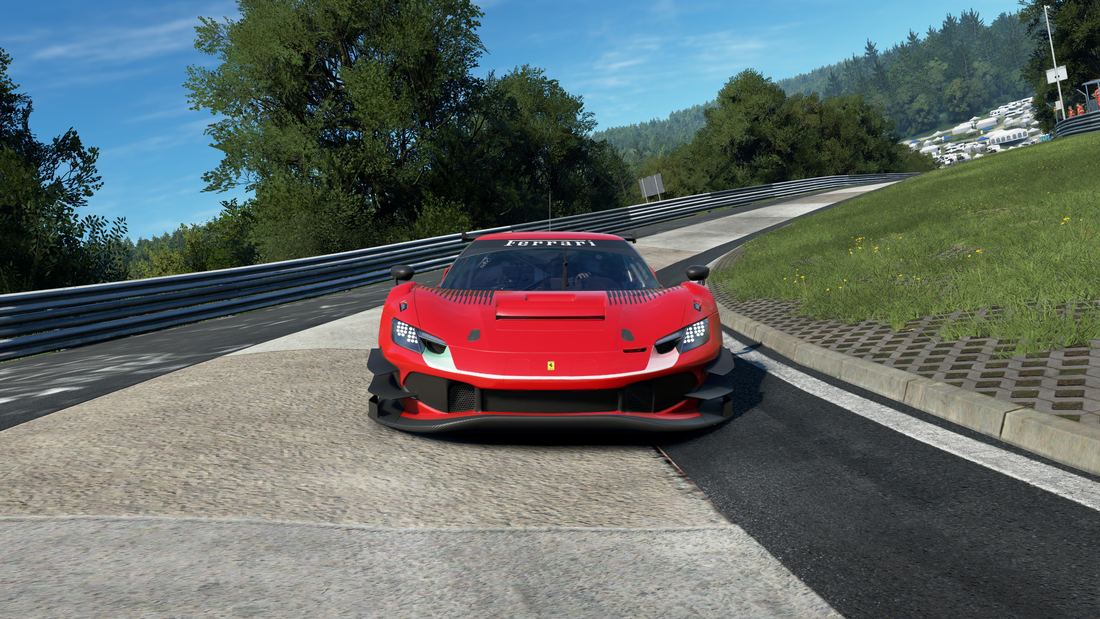
296 GT3 de frente, subiendo hacia el bosque
Nordschleife296 GT3 de frente, subiendo hacia el bosque
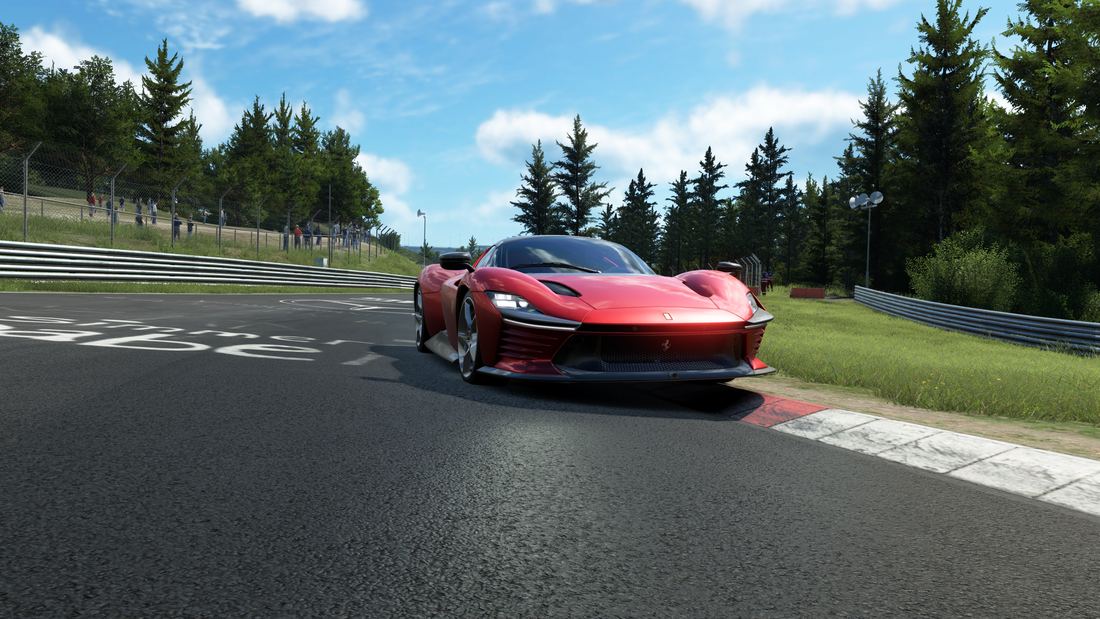
a Daytona SP3 with spectators on the far side of the fence
Nordschleifea Daytona SP3 with spectators on the far side of the fence
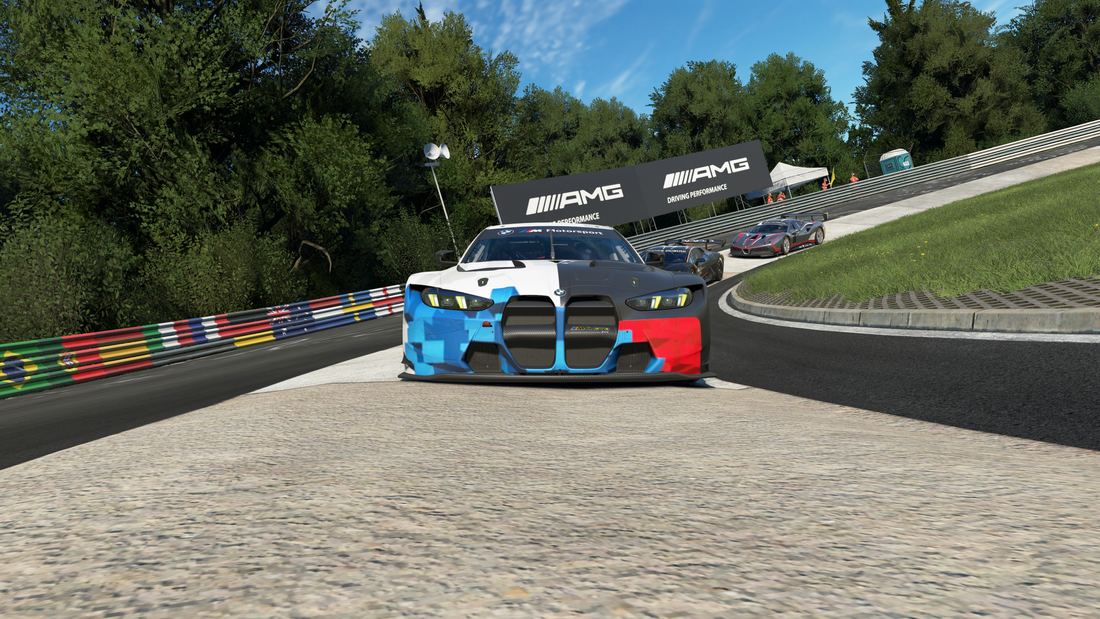
M4 GT3 pisando el piano interior
NordschleifeM4 GT3 pisando el piano interior
Keep reading

If you like this one, try these

To go faster here

Guides that help you
at this circuit

Race here this week

Sebring is in the 24/7 server rotation. Subscribers vote on each week's track.

See the servers