Assetto Corsa EVOassettocorsaevo.es
Home / Tracks / Brands Hatch

Brands Hatch

A circuit built into a natural valley: there's barely a flat metre anywhere. Paddock Hill Bend, immediately past the line, is one of the most intimidating corners in the world.

  • GP
  • Reino Unido
Trazado del circuito de Brands Hatch
3,916Kilometres
9Corners
ClockwiseDirection
1950Opened
Difficulty to learnConsiderable
Average speedHigh
Physical demandHigh
Punishment for mistakesHigh
How much setup mattersConsiderable
Ease of overtakingConsiderable
How it drives

What you'll find

Brands Hatch is built inside a natural valley, and that explains everything about it: there's barely a flat metre on the whole lap. It has two very different configurations — the Indy, short and amphitheatre-bound, and the GP, which heads out into the woods — and in Assetto Corsa EVO the rollercoaster feel is very well captured. It's one of the fastest circuits to fall in love with, because the first corner after the line is already one of the best in the world.

Paddock Hill is blind and downhill: you enter without seeing the exit and the car goes light exactly where you need grip. It's taken on faith with your eyes a long way ahead. Behind it comes the climb to Druids, a slow hairpin where the better braker recovers everything lost up top.

The GP layout opens into the woods after Surtees and drops towards Hawthorn and Westfield with fast, blind corners. It's the part that separates the fast from the very fast: there are no clear references and it all runs on feel.

Where the time is

The three keys

01

Paddock Hill Bend

Ciega y en bajada. Mirada adelante y nada de correcciones a mitad de curva.

02

Druids

La horquilla del adelantamiento. Se entra por dentro y se defiende la salida.

03

Westfield

Fast and blind on the GP layout. Your commitment here defines the whole lap.

Lap guide

Sector by sector

How the lap unfolds from start to finish, with the lines and the places where time is genuinely won and lost.

Trazado de Brands HatchS1

Sector 1 · Paddock Hill y la subida a Druids

Immediately past the line the track plunges away to the right at Paddock Hill Bend. You enter without seeing the exit and with the car going light exactly where you need grip, which makes it one of those corners taken on faith with your eyes a long way ahead. Anyone looking at the apex always arrives late.

At the bottom the track climbs abruptly to Druids, a slow right-hand hairpin where you recover everything lost up top. It's the circuit's natural overtaking spot: you go up the inside and defend the exit, because a fast descent follows.

Trazado de Brands HatchS2

Sector 2 · Graham Hill Bend y Surtees

Graham Hill Bend closes the amphitheatre section and returns you to Cooper Straight. On the Indy configuration you go straight back to the line from here through Clearways and Clark Curve, making an extremely short, intense lap where traffic is constant.

On the GP layout the track carries straight on through Surtees and heads into the woods. The change of character is total: the amphitheatre circuit ends and a fast, undulating layout with far fewer references begins.

Trazado de Brands HatchS3

Sector 3 · El bosque y la vuelta a meta

Pilgrims Drop plunges towards Hawthorn Bend, a blind, committing right where the car arrives light. Then Westfield and Dingle Dell chain descent and climb with corners taken almost blind: this is the part that separates the fast from the very fast, because there are no clear references and it all runs on feel.

Sheene Curve and Stirlings return you to the short layout, and the lap ends at Clearways and Clark Curve, a very long right that opens onto the straight. A good exit from Clark Curve is what lets you attack at Paddock Hill a lap later.

Glossary

Every corner, one by one

What each corner is called, what type it is and what it asks of you.

NºNameTypeWhat it asks for
1Paddock Hill BendDerecha ciega en bajadaMirada adelante. Nada de correcciones dentro.
2DruidsHorquilla lentaEl adelantamiento del circuito. Entrar por dentro.
3Graham Hill BendMedium leftSalida hacia Cooper Straight.
4SurteesFast rightPuerta al trazado GP y al bosque.
5Pilgrims DropFast descentSe gana velocidad hacia Hawthorn.
6Hawthorn BendDerecha ciegaCoche ligero al llegar. Compromiso.
7WestfieldFast downhill rightCiega y sin referencias claras.
8Dingle DellFast leftSube tras la bajada. Cambio de carga fuerte.
9Sheene CurveMedium rightDevuelve al trazado corto.
10StirlingsIzquierda cerradaFrenada seca antes de Clearways.
11-12Clearways / Clark CurveDerecha largaSe abre hacia meta. La salida vale la recta.
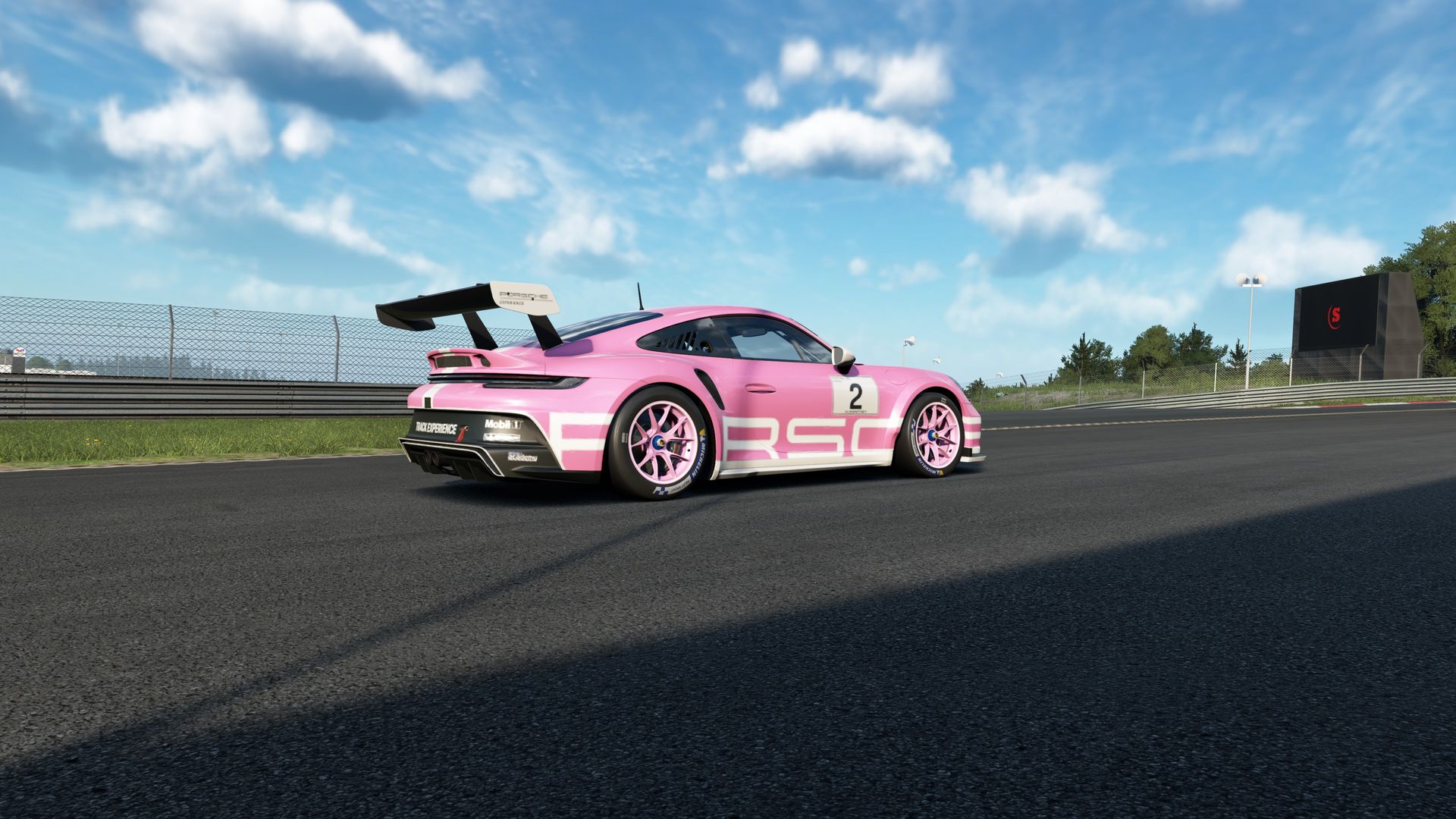
911 GT3 Cup rosa rodando en tanda libre
Community

Brands Hatch

Taken at Nordschleife · 911 GT3 Cup rosa rodando en tanda libre

Paddock Hill Bend is taken looking where you can't see anything yet. Anyone looking at the apex arrives late.
Setup

How to set the car up

Brands Hatch wants a car that copes with load changes. Paddock Hill unloads, Pilgrims Drop unloads and Dingle Dell compresses, all in the same lap. Too stiff a setup skips over the compressions and too soft a one bottoms out on the descent.

Downforce goes relatively high because the straights are short and there are several fast, blind corners where grip breeds confidence. Losing a little top speed on Cooper Straight pays if it buys security at Westfield.

On the Indy configuration front-right tyre wear is high because of the constant run of right-handers. On long runs it pays to watch pressures and avoid a setup that only works on new rubber.

Cars

Which car to bring here

Touring cars

It's the home of the BTCC and it shows: the circuit is built for this kind of car, with extremely close racing and constant contact on the short layout.

GT3

Spectacular here, especially on the GP layout. Paddock Hill in a GT3 is one of the most impressive things in the game, though the weight is paid for in the compressions.

Single-seaters and formula cars

The short layout is too small for them and traffic is constant, but on the GP configuration the woodland section is ideal ground.

Mistakes

What almost everyone gets wrong

  1. Looking at Paddock Hill's apex. It's blind and downhill: you have to look where the car will be, not where it is. Look close and you'll correct, and correcting there means losing the corner.
  2. Frenar tarde en Druids. You arrive uphill and the temptation is enormous. Overshooting means losing the whole exit and being repassed immediately.
  3. Confiarse en Westfield. It's blind and downhill, with less grip than the speed suggests. It's the corner where most people go off on the GP layout.
  4. Entrar pasado en Clearways. It's long and it opens. Gaining on entry here ruins the exit, and the exit is worth the whole pit straight.
  5. Treating the Indy as an easy circuit. It's extremely short, so traffic is constant and finding someone at a different speed in Paddock Hill is the most normal thing in the world.
Practice

How to learn it without frustration

Start with the short layout, the Indy. It has everything essential about the circuit — Paddock Hill, Druids, Clearways — in a lap of under a minute, so you build repetitions quickly and learn the key corners without distraction.

Once you have it, move to the GP and work only the woodland. It's the section with the fewest references and the one that needs the most memory: Hawthorn, Westfield and Dingle Dell are taken on feel, and that feel is built from laps.

Practise Clearways exits in isolation. It's the corner that decides whether you'll be able to attack at Paddock Hill, and in touring car racing that's practically the whole game.

Conditions

Rain and night

In the wet

The gradient sends water down the racing line at Paddock Hill and Pilgrims Drop, so the dry-weather fast line becomes the most slippery. The GP layout's woodland holds damp long after the rain stops.

At night

It isn't a regular night-racing venue and the woodland section goes very dark. Paddock Hill, blind enough in daylight, forces you at night to trust your reference point completely.

Reality and the sim

From the real circuit to Assetto Corsa EVO

Un valle escaneado

Brands Hatch is a circuit where elevation is everything, and that's where laser scanning makes the difference. The exact fall of Paddock Hill, the compression at the bottom and the climb to Druids are all measured, and they're precisely the places an approximate model would render flat and false.

The surroundings provide the references: the Paddock grandstand, the control tower and the trees in the woods, which are all you have to orient yourself by on the GP layout.

What carries over well

The technique of looking far ahead. Brands Hatch teaches you to lift your eyes, and that's a skill that works the same in a sim and on a real track. It's one of the best circuits for developing an amateur driver.

Also the braking references at Druids and Stirlings, the two heavy stops, which are perfectly marked in both worlds.

What doesn't carry over

The felt gradient. Paddock Hill drops in a way a screen only half conveys: in a real car, the hollow feeling on entry is what makes the corner intimidating. Triple screens or VR get reasonably close.

And the atmosphere. Brands Hatch has the crowd right up against the track, to the point where you can see people's faces from the car. That affects you, and it isn't modelled.

Rodar en Brands Hatch

It's one of the busiest circuits in the UK for enthusiasts: it runs track days throughout the season, with sessions split by level and instructors available. Being short, you rack up a lot of laps in little time, which makes it ideal for learning.

It's less than an hour from central London, which probably makes it the most accessible legendary circuit in Europe for a short visit.

Data

Track data

Official nameBrands Hatch Circuit
LocationWest Kingsdown, Kent, Inglaterra
Longitud GP3,916 km
Longitud Indy1,929 km
Corners9 (trazado GP)
DirectionClockwise
Opened1950 como circuito asfaltado
What makes it distinctiveConstruido dentro de un valle natural: apenas hay tramos llanos
Main racesBTCC, British GT, formerly the British Grand Prix
In Assetto Corsa EVOLaser scanned, GP layout
The short layout fits in a handkerchief. The long one heads into the woods and doesn't forgive.
History

Where it comes from

It began as a dirt motorcycle circuit in the twenties and was surfaced in 1950. The short layout, the Indy, is still used for touring cars and bikes; the longer GP opened in 1960.

It hosted the British Grand Prix alternating with Silverstone until 1986. Today it's the home of the BTCC, and its atmosphere of grandstands right against the track is among the most recognisable in British motorsport.

History

The moments that made it

1926

Carreras de motos en un campo

Los primeros usos del terreno fueron para ciclismo y motociclismo sobre hierba, siguiendo el perfil natural del valle.

1950

Se asfalta el circuito

The track was surfaced following the route the motorcycles already used, and in 1960 the woodland extension that forms the GP layout was added.

1964

Formula 1 arrives

Brands Hatch hosted the British Grand Prix, alternating with Silverstone for over twenty years.

1986

The last Grand Prix

Formula 1 stopped racing here for lack of room to expand the facilities. The circuit reinvented itself as the home of British touring car and GT racing.

In person

Visiting the real circuit

Brands Hatch is less than an hour from London and one of the easiest circuits in Europe to visit. It runs track days for private drivers almost every week of the season, with sessions by level, and driving experiences in the circuit's own cars.

For racing, the regular date is the BTCC, the British touring car championship, which fills the natural amphitheatre around Paddock Hill. It's one of the most intimate atmospheres there is: the crowd is a few metres from the track.

Walking access inside the circuit on race days lets you watch Paddock Hill from above, which is probably the best viewing spot in British motorsport. [Confirm calendar and tickets on the official website.]

Data

Trivia

Questions

Frequently asked

How long is Brands Hatch?

The GP layout is 3.916 kilometres and the short one, called the Indy, is 1.929 km. Both share the amphitheatre section with Paddock Hill and Druids.

Which is the most famous corner at Brands Hatch?

Paddock Hill Bend, the blind, steeply downhill right that comes immediately after the finish line. It's one of the most recognisable corners in British motorsport.

Where do you overtake at Brands Hatch?

At Druids, the hairpin at the top of the climb, and braking into Stirlings. On the GP layout you can also try at Hawthorn if your rival got Surtees wrong.

What's the difference between the Indy and GP layouts?

The Indy is the short lap that stays in the amphitheatre. The GP carries on through Surtees into the woods and adds Hawthorn, Westfield and Dingle Dell before returning.

Can you drive at Brands Hatch?

Yes, it runs track days for private drivers through almost the whole season, with sessions split by experience level.

Why did Formula 1 stop racing at Brands Hatch?

For lack of room to expand the facilities to the standards the category began to demand. Its last Grand Prix was in 1986.

Gallery

Community shots

Screenshots taken by the community in Assetto Corsa EVO. Each caption says which circuit it's from.

911 GT3 Cup rosa rodando en tanda libre
Nordschleife911 GT3 Cup rosa rodando en tanda libre
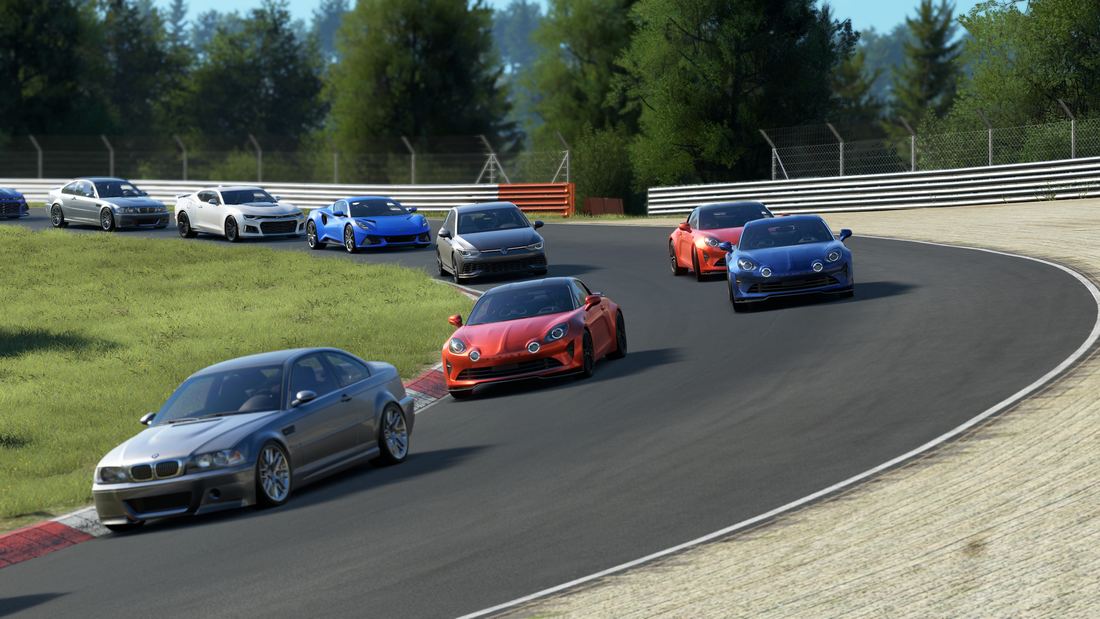
Grupo cerrado saliendo de curva
NordschleifeGrupo cerrado saliendo de curva
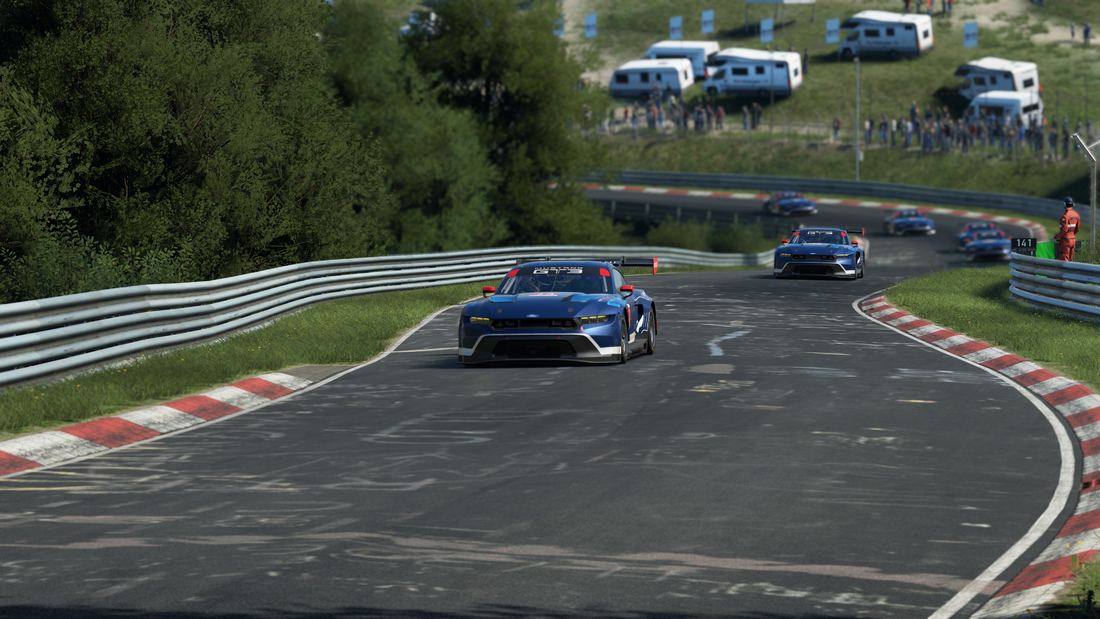
a Mustang GT3 with the crowd behind
Nordschleifea Mustang GT3 with the crowd behind
Keep reading

If you like this one, try these

To go faster here

Guides that help you
at this circuit

Race here this week

Brands Hatch is in the 24/7 server rotation. Subscribers vote on each week's track.

See the servers