Assetto Corsa EVOassettocorsaevo.es
Home / Tracks / Imola

Imola

Antihorario, estrecho y con los muros cerca. Imola es de los pocos circuitos donde el desnivel se nota en el volante y donde un piano mal pisado te manda a la grava.

  • GP
  • Italia
Trazado del circuito de Imola
4,909Kilometres
19Corners
Anti-clockwiseDirection
1953Opened
Difficulty to learnConsiderable
Average speedConsiderable
Physical demandHigh
Punishment for mistakesVery high
How much setup mattersConsiderable
Ease of overtakingLow
How it drives

What you'll find

Imola is an old circuit forced into the modern era, and that tension is what makes it special. It's narrow, it runs the opposite way to almost everywhere else — anti-clockwise — it has genuine elevation change and the walls are close. Overtaking is desperately hard, so qualifying counts double and races are decided by strategy and by other people's mistakes. In Assetto Corsa EVO the kerb work stands out especially: they're tall, they're everywhere, and using them properly is the difference between a good lap and a wasted one.

It's a circuit of rhythm, not spectacular braking. Tamburello and Villeneuve are fast chicanes where you use the inside kerb without fear, but the exit kerb rises more than it looks and unsettles the car exactly as you accelerate.

The upper part — Acque Minerali and the two Rivazzas — is where the lap is made. You climb blind towards Acque Minerali and drop down trail-braking into Rivazza with a light rear end. Being anti-clockwise, your neck and your tyres load up the opposite way to normal.

Where the time is

The three keys

01

Variante Alta

The most treacherous kerb on the lap. Take it straight or it hands the car back sideways.

02

Acque Minerali

A blind descent with trail braking. Gaining here means memorising the marker, not seeing it.

03

Rivazza

Doble izquierda cuesta abajo. La salida manda para el adelantamiento en meta.

Lap guide

Sector by sector

How the lap unfolds from start to finish, with the lines and the places where time is genuinely won and lost.

Trazado de ImolaS1

Sector 1 · Tamburello y Villeneuve

The lap starts with a long straight feeding into the Variante Tamburello, a fast left-right chicane where you use the inside kerb without fear. It's the circuit's only real overtaking spot, so everyone arrives there braking late and the first lap usually leaves debris.

Villeneuve comes immediately after, slower and with the same pattern: inside kerb, clean exit. The exit kerb rises more than it looks and unsettles the car just as you open the throttle. From there you drop to Tosa, a very tight left at the bottom of a descent, where you can try a move up the inside if the car ahead got Villeneuve wrong.

Trazado de ImolaS2

Sector 2 · Piratella y Acque Minerali

From Tosa the track climbs in a straight line up to Piratella, a blind left at the top of the hill. You turn in without seeing the exit and with the car going light — one of those corners where your reference point matters more than your eyes.

Dropping down from Piratella you reach Acque Minerali, probably the best corner on the track: a downhill double right where you have to trail brake with a light rear. Getting a good exit is essential because a long climb to the Variante Alta follows, and any speed you don't carry is paid for uphill.

Trazado de ImolaS3

Sector 3 · Variante Alta y las Rivazza

The Variante Alta is the circuit's most treacherous chicane: the kerbs are enormous and have to be taken straight. Riding them while turning lifts the car and hands it back sideways, with the wall very close. It's where most races come apart at Imola.

And the end is the two Rivazzas, a pair of linked downhill lefts. The first is taken wide, the second dictates the whole pit straight. A good exit from the second Rivazza is what lets you try something at Tamburello a lap later, so it's the corner with the biggest influence on the race even though it doesn't look it.

Glossary

Every corner, one by one

What each corner is called, what type it is and what it asks of you.

NºNameTypeWhat it asks for
1-2Variante TamburelloFast chicanePiano interior entero. El adelantamiento del circuito.
3-4Variante VilleneuveChicane mediaEl piano de salida levanta el coche. Cuidado al acelerar.
5TosaIzquierda cerradaAl final de una bajada. Se puede intentar por dentro.
6PiratellaIzquierda ciegaEn lo alto de la subida, sin ver la salida.
7-8Acque MineraliDoble derecha en bajadaFrenada en apoyo. La mejor curva del trazado.
9-10Variante AltaChicane lentaEnormous kerbs. Take them straight or it hands you back sideways.
11Rivazza 1Izquierda en bajadaSe toma amplia, preparando la segunda.
12Rivazza 2Izquierda cerradaLa salida define toda la recta de meta.
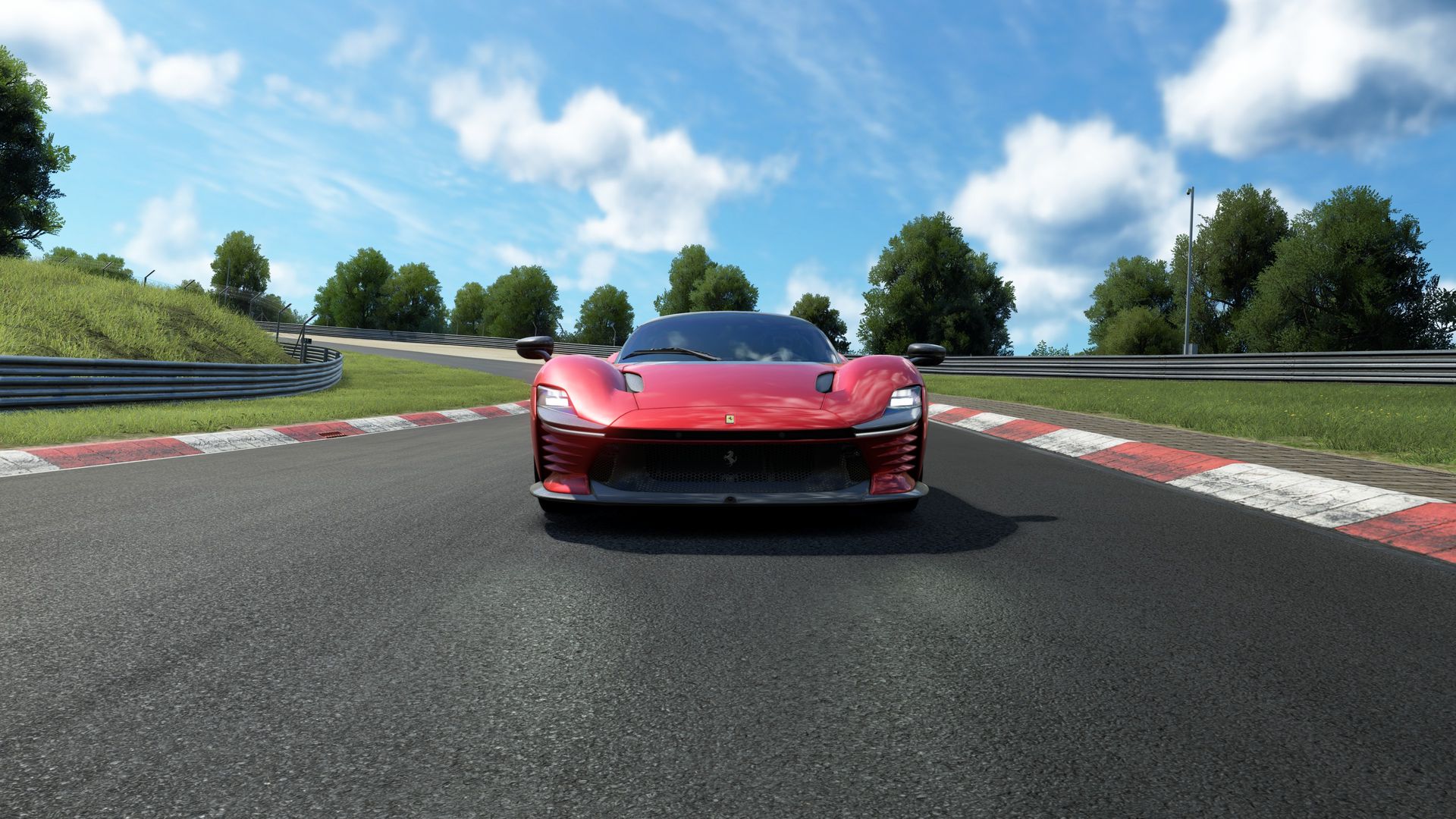
Daytona SP3 de frente entre pianos
Community

Imola

Taken at Nordschleife · Daytona SP3 de frente entre pianos

At Imola the wall isn't far away. It's right there, behind the kerb you were about to ride.
Setup

How to set the car up

Imola wants a car that sits well on the kerbs, because you ride them in four chicanes a lap. Too stiff a setup bounces and spits you off; too soft and it bottoms out in the Acque Minerali compression. The middle ground is softer than most people run by default.

Downforce goes high: there are few long straights and plenty of medium-speed corners, so the compromise is easy compared with Monza. What does matter is balance, because being anti-clockwise the car loads the opposite way to usual and the front-right tyre suffers far more than normal.

Pay attention to ride height. Imola has real elevation change and several compressions, and a very low car bottoms out on the Acque Minerali descent and at the entry to Rivazza, losing grip exactly under braking.

Cars

Which car to bring here

GT3

They work very well and the racing is tactical: with overtaking so hard, qualifying and strategy rule. A heavy car struggles in the chicanes, so cleanliness over the kerbs is what separates drivers.

Formula and single-seaters

Imola is a classic single-seater circuit, and in one the sense of narrowness multiplies. Overtaking is almost impossible without a big pace difference, which is why races are decided in the pits.

Turismos y coches de calle

This is where the circuit is more enjoyable than you'd expect. Going slower gives you time to use the kerbs and read the elevation, and the racing is far closer because overtaking stops being impossible.

Mistakes

What almost everyone gets wrong

  1. Pisar mal los pianos de la Variante Alta. It's the most expensive mistake here. You have to take them with the car straight; turning on top of them sends the car out sideways, and the wall is right there.
  2. Entrar pasado en Acque Minerali. Se llega en bajada y con el coche ligero. Pasarse no solo te cuesta la curva: te deja sin velocidad para toda la subida siguiente.
  3. Intentar adelantar en Piratella. It's blind and narrow. What looks like a gap isn't one, and that's where most of the circuit's penalty-worthy incidents happen.
  4. Descuidar la salida de Rivazza 2. Es la curva que decide si vas a poder atacar en Tamburello o no. Mucha gente la trata como el final de la vuelta cuando en realidad es el principio de la siguiente.
  5. Running the car too stiff. It works at smooth circuits, not here. With four high-kerbed chicanes a lap, stiffness costs you at every one.
Practice

How to learn it without frustration

Imola is learned kerb by kerb. Spend your first runs testing how much kerb you can use in each chicane without unsettling the car: at Tamburello you can use a lot, at the Variante Alta almost none. That mental map is worth more than any tenth of racing line.

Then work the Piratella–Acque Minerali link as if it were a single corner. It's the section that hides the most time and the one you can see worst, so it needs repetition until the turn-in comes without thinking.

And practise race starts. At a circuit where overtaking is this hard, gaining or losing two places at the first braking zone into Tamburello shapes your whole result. It's one of the few places where practising the start pays better than practising pace.

Conditions

Rain and night

In the wet

Imola in the wet becomes very demanding because the kerbs stop being usable and the correct line changes completely. The sections under the trees, especially between Piratella and Acque Minerali, take an age to dry and hold damp when everywhere else is dry.

At night

The circuit isn't built for night racing and it shows: the parkland sections go very dark and the references at Piratella, scarce enough in daylight, disappear. It forces you to drive from memory more than anywhere else on the calendar.

Reality and the sim

From the real circuit to Assetto Corsa EVO

An old circuit, measured to the millimetre

Imola is a fifties layout that has kept its character: uneven asphalt, natural elevation and kerbs that have grown with each rebuild. Assetto Corsa EVO's laser scan captures exactly that, which is why the compressions at Acque Minerali and Rivazza feel like steps rather than a smooth ramp.

Photogrammetry adds the Acque Minerali parkland and the paddock buildings, which are the references everyone uses for the blind turn-in points, especially at Piratella.

What carries over well

Kerb use. Learning in the sim how much kerb each chicane will take applies directly, because the geometry and the height are measured. It's one of the circuits where virtual practice gives the clearest return.

Respect, too. Imola teaches quickly that the margin is small, and that lesson — not being on the limit in every corner at once — is the one closest to real driving.

What doesn't carry over

The perception of narrowness. On screen Imola's track looks a normal width; in reality, with walls and barriers a few metres away, the feeling is completely different and shapes what a driver dares to do.

And the weight of history. Imola is a circuit where terrible things happened, and anyone who goes there drives it with that in mind. It's a factor that isn't modelled but that exists.

El circuito como monumento

Imola is, as well as a circuit, a place of memory in motor racing. There's a monument to Ayrton Senna at Tamburello, and a good share of visitors go as much for that as for the track. Understanding that dimension helps explain why the current layout has the chicanes it has: they aren't a design whim, they're a direct consequence of 1994.

Driving it in the sim knowing this changes the experience. Tamburello and Villeneuve, slow chicanes today, were flat-out corners: when you go through knowing what used to be there, the circuit reads differently.

Data

Track data

Official nameAutodromo Internazionale Enzo e Dino Ferrari
LocationImola, Emilia-Romagna, Italy
Length4,909 km
Corners19
DirectionAnti-clockwise
What makes it distinctiveUno de los pocos trazados antihorarios del calendario
Opened1953
Trazado actualWith the Tamburello and Villeneuve chicanes added after 1994
Main racesEmilia-Romagna Grand Prix, World Endurance Championship
In Assetto Corsa EVOLaser scanned, current GP layout
You overtake at Tamburello or you don't overtake. That simple, and that hard.
History

Where it comes from

The Autodromo Enzo e Dino Ferrari opened in 1953 using roads through Imola's parkland. It hosted the San Marino Grand Prix for two decades and is one of the best-loved layouts for its old-circuit character.

The 1994 weekend, with the deaths of Roland Ratzenberger and Ayrton Senna, changed motor racing safety forever. Tamburello and Villeneuve, once flat-out corners, became the chicanes raced today.

History

The moments that made it

1953

The autodrome is born

The circuit was laid out using roads through Imola's park, beside the river Santerno. For decades it was known simply as the Imola circuit, before taking the names of Enzo and Dino Ferrari.

1980

Formula 1 arrives

Imola hosted the Italian Grand Prix in 1980 and, from 1981, the San Marino Grand Prix, held there for over twenty years despite being on Italian soil.

1994

The weekend that changed motor racing

The deaths of Roland Ratzenberger and Ayrton Senna on the same weekend triggered the biggest safety overhaul in the sport's history. Tamburello and Villeneuve, once flat-out corners, became the chicanes we have now.

2020

El regreso

After fourteen years off the calendar, Formula 1 returned to Imola. The circuit has since established itself as one of the crowd's favourite dates for its classic character.

In person

Visiting the real circuit

Imola is one of the most accessible circuits in Europe for a fan: it's in the middle of the town, beside the river, and much of the site is public park. You can walk around inside on almost any day of the year without paying.

The Ayrton Senna monument, on the outside of Tamburello, is essential and receives flowers daily. There's also a museum devoted to the circuit's history and the races it has hosted.

The circuit runs track days and club events through much of the season, and it's less than an hour from Bologna, which makes it easy to combine with a trip round the region. [Confirm calendar, prices and access on the circuit's official website.]

Data

Trivia

Questions

Frequently asked

How long is the Imola circuit?

The current layout is 4.909 kilometres with 19 corners. It's short and narrow compared with the calendar average.

Why does Imola run anti-clockwise?

Because of the original 1953 layout, which used the park roads. It's one of the few anti-clockwise tracks in international racing, and that changes tyre wear and the load on a driver's neck.

Where do you overtake at Imola?

Almost only at the Variante Tamburello, at the end of the pit straight. Tosa lets you try if your rival got Villeneuve wrong, but this is a circuit where qualifying counts enormously.

What happened at Imola in 1994?

Roland Ratzenberger and Ayrton Senna died on the same weekend. It triggered the biggest safety overhaul in the history of motor racing, and it's why Tamburello and Villeneuve are chicanes today.

Which is the hardest corner at Imola?

Acque Minerali, por la frenada en apoyo cuesta abajo, y la Variante Alta, por los pianos: hay que pisarlos con el coche recto o te devuelve cruzado contra el muro.

Can you visit the Imola circuit?

Yes. It's in the middle of the town and much of the site is public park you can walk through, with the Senna monument on the outside of Tamburello.

Gallery

Community shots

Screenshots taken by the community in Assetto Corsa EVO. Each caption says which circuit it's from.

Daytona SP3 de frente entre pianos
NordschleifeDaytona SP3 de frente entre pianos
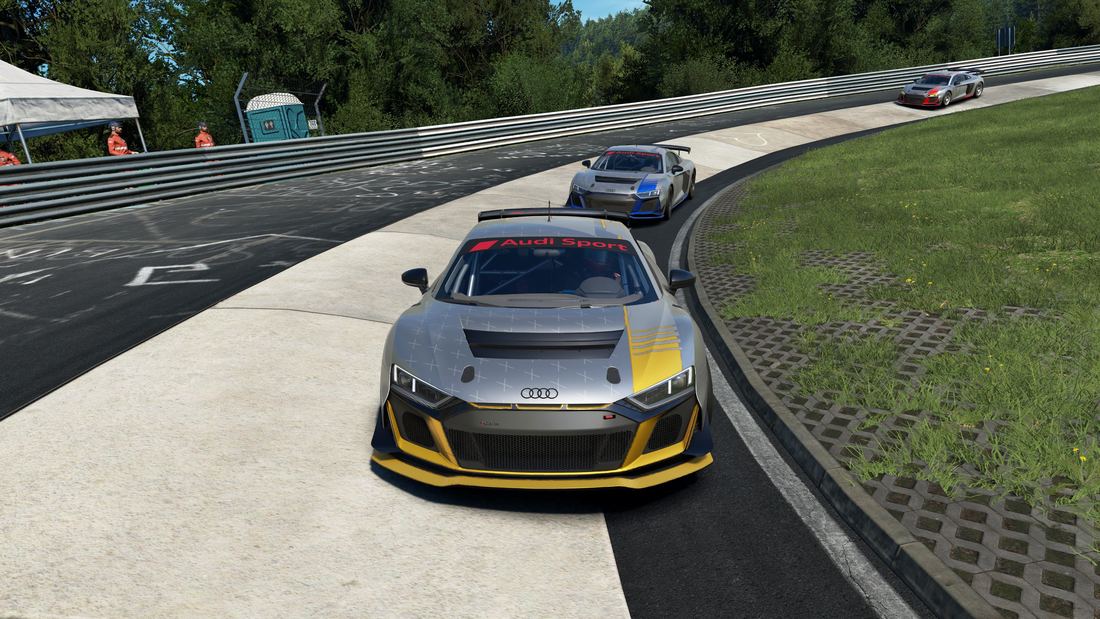
R8 LMS liderando el tren de GT3
NordschleifeR8 LMS liderando el tren de GT3
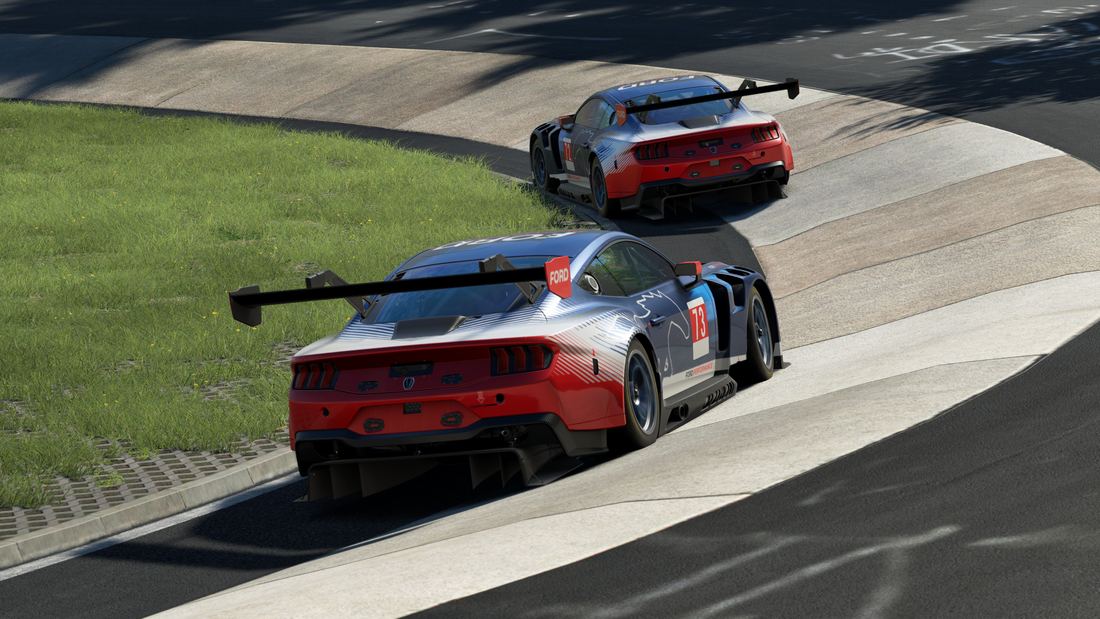
Dos Mustang encadenando la misma curva
NordschleifeDos Mustang encadenando la misma curva
Keep reading

If you like this one, try these

To go faster here

Guides that help you
at this circuit

Race here this week

Imola is in the 24/7 server rotation. Subscribers vote on each week's track.

See the servers